Trending
Women’s participation in the judiciary has traditionally been limited, although in recent decades, many women have taken on prominent responsibilities as lawyers and judges. Pioneering figures such as Justice Fatima Beevi, Justice Indu Malhotra, and Justice B. V. Nagarathna have made significant contributions to the Indian legal system. Despite their growing representation in the Supreme Court and High Courts, women remain under-represented, emphasising the continuous need to improve gender equality in the judiciary.
This article will examine the journeys of women judges, including the problems they confront, their accomplishments, and the impact of their work on furthering justice and social change.
Women’s admittance into the judiciary was nearly unthinkable in pre-independence India due to the firmly ingrained patriarchal worldview. Few women sought legal study, and under British control, men dominated the judiciary. There was much disagreement about whether women could serve as lawyers or judges, and even entering the legal profession was difficult, making the prospect of becoming a judge highly unlikely.
Following independence, the Indian Constitution granted equal opportunities and rights to all citizens, making room for women in the judiciary. Initially, women were appointed to municipal courts, with only minimal representation in the High Courts and Supreme Court. Women judges gained prominence over time due to their ability and decision-making, and constitutional measures, combined with cultural change, steadily expanded their numbers. Many people have since contributed to social change through momentous decisions.
The admission of women to the Indian judiciary was a historic and revolutionary event. Overcoming societal and professional difficulties, these women carved out a distinct identity for themselves in the judiciary.
• Anna Chandy (1937) – India’s first woman judge was appointed to the Travancore, establishing history long before India gained independence.
• Leila Seth (1978) – The first woman to be appointed Chief Justice of the Himachal Pradesh High Court (1991).
• Fatima Beevi (1989) – The first woman appointed to the Supreme Court of India, spurring increased female involvement in higher judiciary.
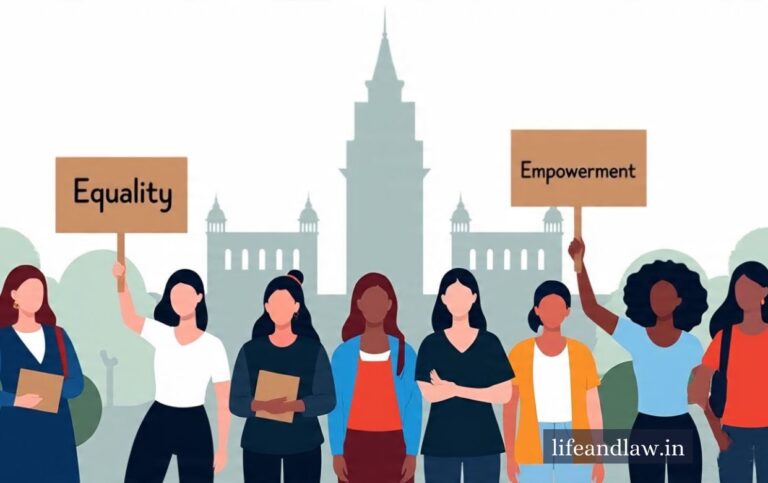
Women judges not only protect the law and provide justice, but they also play an important role in promoting positive social change. They contribute a more sensitive and balanced viewpoint to securing justice for marginalised, oppressed, and neglected communities. Their effect is particularly evident in situations involving women’s and girls’ rights, when their verdicts can have a substantial impact on cultural perceptions and legal precedents.
A Major Step Towards Gender Equality: Women are frequently seen as second-class citizens in a country still dominated by patriarchal values. Women judges play an important role in combating this imbalance through their rulings, delivering a strong message of gender equality and increasing women’s understanding of their rights.
Justice for Crimes against Women: When it comes to sexual harassment, rape, and domestic abuse, women judges take a tough and sympathetic approach. Landmark examples, such as the Nirbhaya case, show how their involvement aided the process of providing strong and appropriate sentences, resulting in widespread approbation.
Contribution to women’s property and inheritance rights: Historically, women suffered limits on property and inheritance. Women judges, such as Vinita Sharma vs. Rakesh Sharma under the Hindu Succession Act of 1956, established that daughters had equal rights to paternal property, empowering women to seek their legal entitlements.
Family Justice and Improving Women’s Social Standing: In family courts, women judges play an important role in divorce, maintenance, custody, and dowry cases, ensuring fairness. Their presence in the judiciary also inspires female lawyers and students, improving women’s social and legal standing and encouraging more female engagement in the legal profession.
• Limited opportunities and low numbers – Women are under-represented in the High and Supreme Courts.
• The patriarchal attitude – Women are frequently assigned subordinate roles in major situations.
• Workplace discrimination – Challenges in managing major cases and promotions.
• Stress associated with family duties – It is challenging to balance job and family life.
• Mental strain in sexual offence instances – Increased stress from society and the media.
• Security concerns – The accused made threats and exerted pressure.
• Limited leadership opportunities – There are extremely few women in high positions.
• Increase the number of female judges – Special encouragement should be given during the appointment process to improve women’s representation in the judiciary.
• Ensuring equal opportunity and leadership engagement – Avoid gender bias when nominating women to the High Court and Supreme Court, and provide leadership chances.
• Implement anti-discrimination measures – Women working in the judiciary should be subject to strict anti-discrimination measures.
• Safety and protection measures – Special security precautions should be made to protect women judges.
• Provide a supportive workplace environment – Workplaces should be made more welcoming to women, with maternity leave and flexible working hours.
• Sensitivity-based case allocation – Given the mental strain that women judges face when addressing sexual offence cases, adequate help should be provided.
• Awareness and mindset shift – Campaigns should be launched to foster a good attitude towards women’s leadership in society and the court.
• Implementation of inclusive policies – The judiciary and administration should work together to create equal rules and opportunities for male and female judges.
Women judges have an important role in promoting equality and justice, making social justice more sensitive and efficient. Their contributions extend beyond symbols, but gender bias, limited chances, and leadership issues continue to be impediments.
According to Adv. Abdul Mulla, as detailed on his legal platforms www.asmlegalservices.in and www.lifeandlaw.in, giving women equal chances, safety, and rights in the judiciary can result in a more balanced and inclusive system, generating significant social change.
Adv. Abdul Mulla (Mob. No. 937 007 2022) is a seasoned legal professional with over 18 years of experience in advocacy, specializing in diverse areas of law, including Real Estate and Property Law, Matrimonial and Divorce Matters, Litigation and Dispute Resolution, and Will and Succession Planning. read more….
Copyright BlazeThemes. 2025