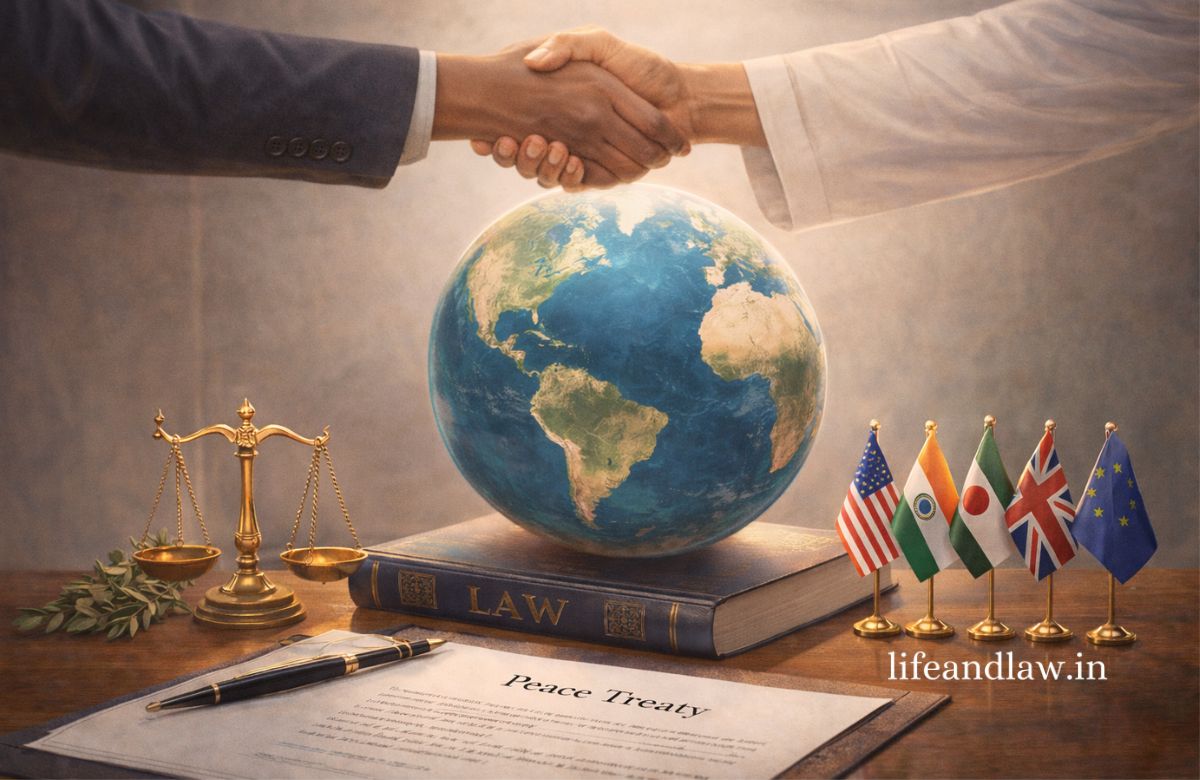
In an increasingly interconnected globe, promoting understanding and peace has never been more crucial. The foundation of World Understanding and Peace Day emphasises the global need for conversation, cooperation, and legal frameworks that promote peaceful coexistence. The function of law, both at the national and international levels, is vital in promoting peace, resolving conflicts, and upholding justice. On this day, it is critical to consider how legal channels might help to establish a more harmonious community.
This article will look at the legal frameworks and efforts that can help to create a more peaceful world. It will concentrate on how law helps to resolve conflicts, defends human rights, and upholds the concepts of justice, equality, and fairness that are essential to peace. The article will examine legal frameworks and peace-building methods to highlight their importance in establishing a just and peaceful global society.
Legal Pathways to a Harmonious Society
Achieving global peace and understanding is a difficult and varied task, but one that can be aided by strong legal structures. Legal systems, whether national or international, are critical tools for securing justice, settling conflicts, and facilitating peaceful coexistence. The following are some of the important areas where the law can help build a more harmonious community.
- International Law and Diplomacy
International law serves as the framework for peaceful interactions between nations. Treaties and conventions, like the United Nations Charter, establish norms for maintaining peace and resolving conflicts. International diplomacy, aided by organisations such as the United Nations (UN) and the International Court of Justice (ICJ), aids in the resolution of global issues such as war, terrorism, and human rights breaches. These legal institutions seek to prevent conflict and promote peaceful dispute resolution, providing legal answers to problems that could otherwise turn violent.
- Human Rights and Equality
Human rights law is another important avenue to peace. The Universal Declaration of Human Rights (UDHR), adopted by the United Nations in 1948, establishes fundamental rights to which all people are entitled, regardless of nationality, ethnicity, or religion. Human rights breaches can lead to conflicts, thus recognising and protecting these rights is critical to maintaining peace. Legal instruments such as the International Covenant on Civil and Political Rights (ICCPR) and the Convention on the Elimination of All Forms of Racial Discrimination (CERD) contribute to ensuring equal treatment for all, developing a feeling of justice and shared humanity.
- Conflict Resolution Mechanisms
Legal structures for conflict resolution are critical for preventing disputes from turning violent. Arbitration, mediation, and bargaining play critical roles in dispute resolution. Alternative Dispute Resolution (ADR) strategies, such as mediation and negotiation, offer nonviolent ways to resolve disagreements. For example, in local and international conflicts, legal professionals and arbitrators can assist the parties in finding common ground, ensuring that both sides are heard and that a peaceful resolution is found.
- Criminal Justice System and Accountability
A functioning criminal justice system is essential for keeping peace in any society. Legal systems provide opportunities for justice by prosecuting criminals and protecting victims’ rights. International judicial bodies, such as the International Criminal Court (ICC), hold persons accountable for genocide, war crimes, and crimes against humanity. Accountability and justice deter further violence and contribute to the restoration of trust in the rule of law, both of which are necessary for a peaceful society.
- Promoting Social Justice
The concept of social justice holds that everyone should have equal access to opportunities, resources, and legal protections. Legal provisions aimed at fostering social justice, such as affirmative action and anti-discrimination legislation, ensure that marginalised communities do not fall behind. In India, for example, legal frameworks such as the Scheduled Castes and Scheduled Tribes (Prevention of Atrocities) Act, 1989 aim to avoid social inequalities and promote a more inclusive society. Ensuring that everyone has an equal interest in society is essential for long-term peace.
Conclusion
Legal paths to a harmonious society include preserving the rule of law, protecting human rights, and resolving disagreements peacefully. International law, human rights frameworks, and social justice efforts all play important roles in building global peace and collaboration, which is required for a peaceful world.
Adv. Abdul Mulla, an legal practitioner, provides valuable legal resources through www.lifeandlaw.in and www.asmlegalservices . These platforms offer essential information to anyone looking to better grasp their legal rights and contribute to a more peaceful community.