Loading ...

Life & Law

RECENT NEWS

Bribery, Betrayal, and the Law: Fighting Corruption Together

Every time a public official accepts a bribe, the damage extends far beyond the money; it undermines society’s trust in its institutions. Corruption undermines fairness, degrades governance, and delays development, producing a vicious cycle that disproportionately affects justice and public welfare. It is a betrayal that affects all citizens, from individuals looking for basic services to businesses and communities that rely on open systems.

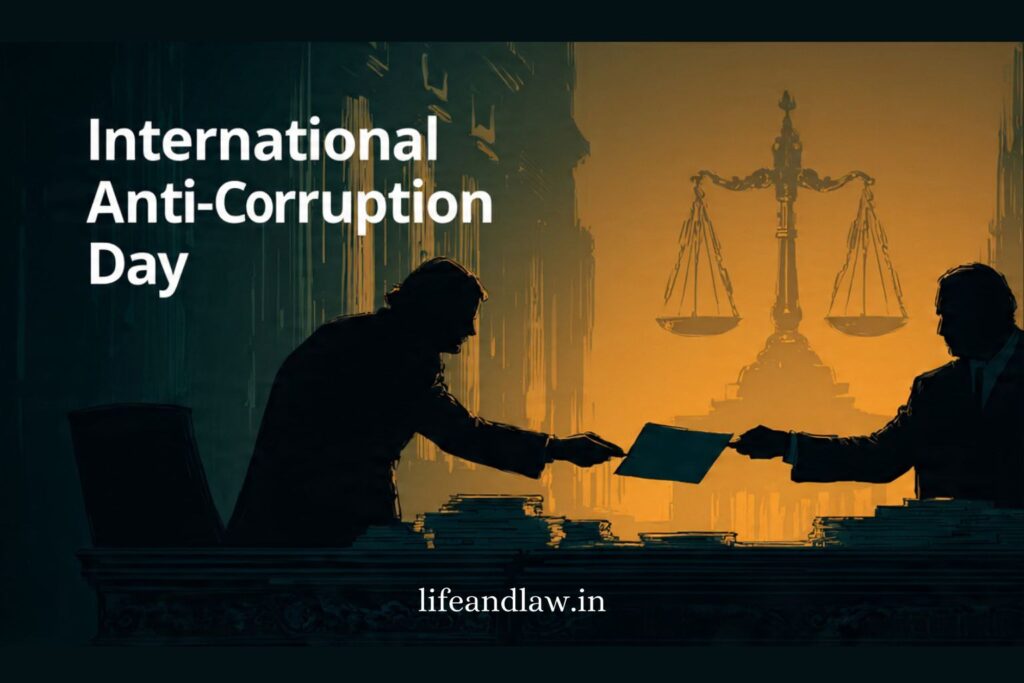
On International Anti-Corruption Day (9 December), we are reminded of our shared responsibilities in combating this menace. The aim of this article is to look at how bribery and other corrupt activities hurt society, the legal structures in place to combat them, and the role that each individual can play in creating a more transparent, accountable, and just world.

What is Corruption — More Than Just Bribes

Corruption is broadly defined as the “abuse of entrusted power for private gain.” Bribery, embezzlement or misappropriation of public funds, nepotism or favouritism in jobs or contracts, rigged tenders, misuse of influence, and other forms of corruption are all included.

Whether a public official asks for a bribe in exchange for basic services or a contractor offers subpar work due to kickbacks, both are different shades of the same treachery.

Why Corruption Undermines Society — Its Costs

When corruption becomes prevalent, it erodes trust in public institutions and the concepts of fairness and merit. Citizens begin to feel that success is determined by money or connections rather than justice, which undermines the legitimacy of governance.

Economically and socially, corruption raises costs, inhibits honest firms, and diverts resources intended for critical services such as healthcare, education, and infrastructure. The most disadvantaged are disproportionately harmed, resulting in increased inequality. Ultimately, corruption stifles growth, decent governance, and human rights, endangering democracy and the rule of law.

Global and International Response — Why 9 December Matters

To confront this global issue, the world banded together under the United Nations Convention Against Corruption. With its approval and subsequent ratification by other countries, including India, the Convention called for coordinated worldwide action against corruption.

Since 2003, December 9 has been designated as International Anti-Corruption Day, a day to promote awareness, remind governments of their responsibilities, and encourage citizens worldwide to take a stand against corruption.

The concept is straightforward: corruption knows no bounds. Money, influence, and illegal activities frequently cross national borders, thus combating corruption must be global, collaborative, and based on common principles of integrity, accountability, and transparency.

Legal & Institutional Tools in India — How the Law Fights Back

A robust legal and institutional structure underpins India’s anti-corruption efforts. The Prevention of Corruption Act of 1988 (PCA) makes bribery, abuse of office, misappropriation, and holding of disproportionate assets by public officials illegal. The 2018 amendment widened the definition of bribery to encompass any “undue advantage,” increased fines to 3-7 years in jail, and permitted the forfeiture of illegally acquired property, bringing India in line with international standards under UNCAC.

The Lokpal and Lokayuktas Act of 2013 established independent ombudsmen at the Union and state levels to examine corruption charges against high-ranking officials, while the Whistleblowers Protection Act of 2014 protects those who reveal wrongdoing.

Systemic reforms such as GST, digitisation, and e-governance increase transparency, diminish human discretion, and limit potential for corruption. Together, these rules and initiatives improve accountability, prohibit corrupt behaviours, and empower citizens to demand integrity and justice in governance.

Our Role as Citizens — Why “Your NO Counts”

Laws and institutions are important, but they alone cannot end corruption. Citizens are essential for real change. Individuals have power: we can refuse to take bribes, demand transparency, use tools like information requests, report corruption when we encounter it, and encourage honest public servants.

Observing International Anti-Corruption Day is more than just a symbolic gesture; it is a reminder of our shared obligation. Each “no” to bribes, each act of transparency and accountability, adds up. Transparency, ethics, and civic vigilance are equally crucial as laws.

When people speak up and corruption becomes socially unacceptable, even the most entrenched crooked regimes start to disintegrate.

Challenges Ahead — Why the Fight Is Far From Over

Despite legislative reforms, impediments persist. Delays are common in the enforcement process. Bureaucratic red tape, political influence, or a lack of resources can all impede investigations and prosecutions. Even revised laws are sometimes criticised for imposing strict procedural safeguards that make conviction more difficult.

Furthermore, corruption is more than just a legal issue; it is also cultural. Bribery and favouritism have grown commonplace in many areas, and many residents regard them as necessary “shortcuts.” Changing such a perspective requires time, knowledge, and constant social pressure.

Nonetheless, the existence of laws, institutions, and international cooperation provides optimism. What we need is consistent enforcement, institutional independence, civic vigilance, and a culture of integrity.

Conclusion

Corruption is more than just the theft of public monies; it also violates trust, justice, and fairness, impeding growth and injuring the most vulnerable. Combating it is a shared responsibility, and citizens must demand transparency and integrity.

Adv. Abdul Mulla emphasised that legal understanding and informed participation boost this struggle. Resources such as his publications on www.asmlegalservices.in and www.lifeandlaw.in provide help on understanding anti-corruption laws and civic duties, supporting the importance of the law in fostering accountability.

RECENT POSTS

CATEGORIES

Leave a Reply

Your email address will not be published. Required fields are marked *

Life And Law Blogs

Life & law provides valuable insights by simplifying complex legal concepts and connecting them to real-life experiences …read more

Why I write

At Life & law, my mission is simple. to make the law accessible and empower people with knowledge to confidently face life’s challenges …read more

Copyright BlazeThemes. 2025