Trending
The acknowledgement of the Consumer Protection Act of 1986 emphasises the significance of raising consumer awareness, ensuring consumer protection, and effectively enforcing such rights. It also recognises the significant achievements of government agencies, organisations, and individuals who have worked to protect consumer interests and develop the consumer protection framework.
Consumer rights promote safety, transparency, and access to high-quality goods and services, all of which are critical in today’s market-driven world rife with exploitation and disinformation. Legal protection promotes fairness, accountability, and trade trust. The aim of this article is to emphasise the significance of consumer rights and explain their legal legitimacy.
Consumer Protection Act, 2019
The Consumer Protection Act of 2019 increases India’s consumer protection framework by replacing the old 1986 Act. It solves current market concerns, improves consumer safety, expedites grievance redressal, and promotes responsibility while discouraging unethical and unfair trading practices.
Key provisions of the Consumer Protection Act of 2019:
The Act explicitly recognises fundamental consumer rights and protects them from hazards, exploitation, unfair practices, and fraud. These rights assure fair treatment and protect consumers’ interests in the marketplace.
A three-tier framework is established for effective complaint resolution:
The National Consumer Commission: Handles national-level issues and protects consumers’ interests throughout India.
The State Consumer Commission: Operates in each state to resolve state-specific issues.
The District Consumer Commission: Functions at the district level to quickly resolve local issues.
Provisions govern e-commerce to prevent online fraud, maintain openness, and require rapid resolution of complaints about online buying and delivery services.
Strict measures penalize traders engaging in deceptive advertising, protecting consumers from misleading information.
Multiple complaint-filing options, including online portals, are available to ensure timely resolution.
Simplified mechanisms enable quicker grievance resolution, making the process more consumer-friendly.
The Act imposes stringent penalties on fraudulent traders, deterring unethical business practices and ensuring consumer protection.
In India, the Consumer Protection Act protects consumer rights by assuring marketplace safety, fairness, and openness. These rights enable consumers to make educated decisions, protect them from exploitation, and allow them to seek redress for problems.
Consumers are entitled to protection from goods and services that can cause bodily, emotional, or social harm. All items and services must meet established safety requirements.
Before purchasing a product or service, consumers have the right to get complete and accurate information about the manufacturer, intended use, lifespan, and any dangers.
Consumers can freely choose goods and services based on their preferences, and in the event of faults or unsuitability, they have the right to a replacement, a refund, or to file a complaint.
If a consumer is misled, they have the right to file a complaint and seek justice in court or through consumer forums.
Consumers have the right to appropriate recompense for losses, including financial, physical, and mental pain caused by defective goods or inadequate services.
Consumers have the right to be educated on their rights, obligations, and available products and services so that they may make informed decisions.
Consumers must be treated equally, with no distinctions based on age, gender, caste, religion, or other characteristics.
Consumers have the right to be protected from harmful, poisonous, or dangerous products that represent a safety risk.
Consumers have the right to get broad information regarding product quality and seller practices in order to promote marketplace transparency, accountability, and confidence.
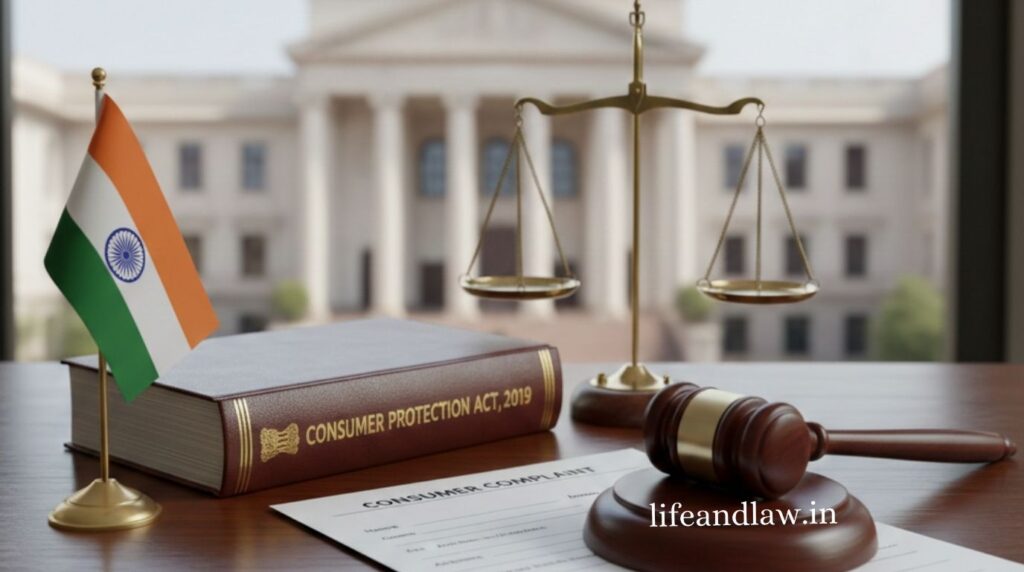
Unfair practices, bad products, or poor service all constitute violations of consumer rights. The Consumer Protection Act establishes legal remedies, allowing customers to seek prompt and effective justice.
How are consumers’ rights violated?
Consumer rights are infringed in a variety of ways. Defective, hazardous, or misleading goods and services jeopardise safety and trust. Fraud happens when traders give inaccurate or misleading information. Overcharging, enforcing unjust contract terms, and providing poor products are all examples of unfair practices. Furthermore, dismissing or delaying legitimate consumer complaints denies customers their rightful protection, emphasising the importance of effective legal remedies.
What should be done if consumer rights are violated?
When their rights are violated, consumers have many options. They should first make a complaint with the trader or service provider to rectify the problem directly. If their complaint remains unresolved, consumers can contact Consumer Commissions at the district, state, or national levels for prompt resolution. Consumers can seek restitution for financial, physical, or mental harm. Mediation, which involves a neutral third party, can help to establish an equitable conclusion. If these steps fail, consumers have the right to file a lawsuit against the merchant.
Filing claims under the Consumer Protection Act:
The Consumer Protection Act of 2019 permits consumers to make claims when their rights are violated, and it establishes a structured legal system with tiered consumer tribunals to ensure effective and speedy dispute resolution.
1.Structure of Consumer Courts:
The consumer court system operates on three levels: The District Commission settles local issues up to Rs. 50 lakh, the State Commission handles cases between Rs. 50 lakh – Rs. 2 crore and the National Commission resolves claims beyond Rs. 2 crore. , ensuring consistent consumer justice across India.
2.Procedure for submitting claims: Consumers file claims with the relevant commission using a formal complaint and affidavit, as well as supporting documents including bills, receipts, warranty cards, and proof of purchase.
3.Hearing Procedure for Claims: During the hearing, both consumers and traders offer evidence and arguments. The commission has the authority to validate claims and compensate individuals, as well as to reject unfounded allegations. If authorised, traders must compensate, replace items, or implement corrective actions.
4.Mediation and Settlement Procedures: Mediation allows for speedy dispute settlement by having a neutral mediator assist both parties in reaching a compromise.
5.Appeal Procedure: Parties who are dissatisfied with a decision can file an appeal with a higher commission, ensuring further review and impartiality.
Education and Awareness: Schools, colleges, and social organisations should all run educational programs to enlighten customers of their rights. Social media, television, radio, and newspapers can also be used to raise awareness and reach a larger audience.
Consumer Protection Workshops: Social organisations, government agencies, and consumer campaigners can hold workshops to educate consumers on their rights, duties, and potential remedies.
Strengthening the judiciary: The court system should be made more open, efficient, and user-friendly in order to provide customers with quick and simple justice. Additional actions are required to expedite case settlement in Consumer Commissions.
Education Under the Consumer Protection Act: To boost consumer trust and increase rights enforcement, the Consumer Protection Act must be effectively disseminated and properly implemented.
Using Online Platforms: Through dedicated websites and applications, digital platforms may effectively raise awareness and simplify online complaint registration.
Protecting consumer rights is critical because consumers play an important role in the marketplace. The Consumer Protection Act ensures access to high-quality goods and services while also providing legal avenues for seeking justice when rights are infringed.
Raising awareness through school, college, media, and government programs is critical. Streamlining the complaint resolution procedure at Consumer Commissions can assist resolve issues more quickly. Legal professionals like Adv. Abdul Mulla gives insights on consumer rights and related legal guidance via sites such as www.asmlegalservices.in and www.lifeandlaw.in.
Adv. Abdul Mulla (Mob. No. 937 007 2022) is a seasoned legal professional with over 18 years of experience in advocacy, specializing in diverse areas of law, including Real Estate and Property Law, Matrimonial and Divorce Matters, Litigation and Dispute Resolution, and Will and Succession Planning. read more….
Copyright BlazeThemes. 2025