Loading ...

Life & Law

RECENT NEWS

Knowledge, Struggle, and Revolution: Dr. Babasaheb’s Educational Life

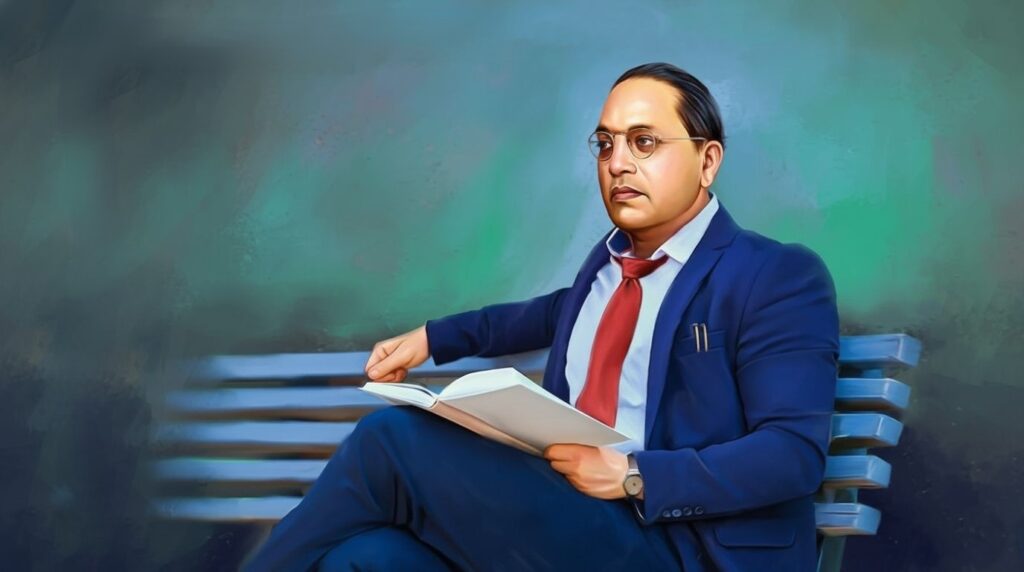
Dr. Babasaheb Ambedkar was a pioneer of India’s social and political revolution, who used education as a powerful instrument to help the poorest members of society. Born into an untouchable family, he experienced terrible caste persecution from a young age, yet his determination, hard effort, and strong appreciation for knowledge never wavered. His pursuit of higher education at Columbia University and the London School of Economics impacted his outlook on human development and social change.

The aim of this article is to demonstrate how Ambedkar’s educational journey, led by the principle of “Educate, Organise, Agitate,” made education the primary tool for social reform and continues to inspire current and future generations.

Early Struggles in School

Dr. Babasaheb Ambedkar was born in Mhow on April 14, 1891, to a Dalit household and experienced caste oppression from a young age. As a member of the Mahar community, he was viewed as untouchable and faced social marginalisation despite pursuing an education. Despite repeated humiliation, his idea that education was the only road to dignity and independence persisted and became the foundation of his life’s goal.

Throughout his primary education in Satara, discrimination was openly practiced. He was forced to sit on the back benches, barred from socialising with other pupils, and had no direct access to drinking water. These encounters exemplified the severe caste structure of the time. Babasaheb pursued his studies despite financial difficulties, thanks to the encouragement of his father, Ramji Maloji Sakpal. Passing the matriculation examination in 1907 as the first Dalit student from his school instilled pride and hope in the Dalit community.

Journey Toward Higher Education

Dr. Ambedkar’s quest for higher education was inextricably linked to his goal for societal reform. After matriculation, he enrolled at Elphinstone College in Mumbai, where he received his B.A. degree in 1912. Despite caste discrimination and financial challenges, his dedication to education never wavered. His academic achievements earned him a scholarship from Baroda State, which altered the trajectory of his life. This chance enabled him to fly to the United States in 1913 and study at Columbia University.

Education at Columbia University

Babasaheb Ambedkar studied at Columbia University in an environment that was mostly free of caste discrimination, which affected his thinking significantly. He finished his MA degree and published his dissertation, “The Evolution of Provincial Finance in British India.” He later received a PhD for his thesis, “The Problem of the Rupee: Its Origin and Solution,” which had a considerable impact on Indian economic theory. His exposure to democratic values, equality, and intellectual freedom fuelled his determination to combat injustice in India through education and policymaking.

London School of Economics and Gray’s Inn

Babasaheb returned to India and briefly worked in the Baroda State, but he continued to endure persecution. Disappointed, he returned abroad for further study. In 1921, he enrolled at the London School of Economics and received a D.Sc. degree. At the same time, he studied law at Gray’s Inn and earned his Bar-at-Law. His studies in England enriched his knowledge of law, economics, and social justice.

Education and Social Services

Babasaheb’s higher education prompted him to devote his life to the empowerment of the disadvantaged. He realised that education was more than just a means of personal improvement; it was also a potent tool for societal change. He used his knowledge to design the Indian Constitution and advocate for the rights and dignity of Dalits and other marginalised communities.

Challenges and Inspiration in Education

Dr. Ambedkar’s scholastic career was characterised by a constant struggle against discrimination, poverty, and social resistance. These difficulties hampered his childhood, but schooling provided him meaning and inner strength. The shame he experienced motivated him to fight inequity via education and reform.

The Harshness of Caste Discrimination

Babasaheb was bullied and mistreated in schools and other places since he was a child. Such incidents severely upset him, but they also fuelled his drive to combat caste injustice, which was bolstered by his father’s backing.

Facing financial difficulties

Financial difficulties remained an ongoing concern. Even with scholarships, his time abroad was defined by great thriftiness. These trials honed his discipline and resolve rather than discouraged him.

Faced with opposition from Society

Society struggled to accept an educated Dalit, and Babasaheb was mocked even after receiving renowned degrees. This taught him that education should be utilised to oppose oppressive societal institutions.

Inspiration: Recognising the Greatness of Education

Dr. Ambedkar turned education into a weapon of empowerment. His slogan “Educate, Organise, and Agitate” emphasised awareness, solidarity, and resistance against injustice.

Education and Social Reform

According to Dr. Ambedkar, education was critical for liberating society from oppression and building equality and justice through constitutional methods.

Lessons for today's generation

Dr. Ambedkar’s journey demonstrates that education has the power to transform individuals and societies, and that it should be used for social transformation rather than just employment.

Dr. Babasaheb Ambedkar’s Perspective on Education

He saw education as the primary means of social, economic, and political reform and empowerment.

Impact of Dr. Babasaheb Ambedkar’s Education on Society

Dr. Ambedkar’s education sparked significant social, economic, and political change. It influenced the Indian Constitution, spurred Dalits to assert their rights, promoted democracy, and served as a lasting model of education as the foundation of equality, justice, and social progress.

Conclusion

Dr. Babasaheb Ambedkar’s life exemplifies how education can become a powerful tool for social change and personal empowerment. His journey shows that determination and learning can challenge injustice and transform society, providing a lasting inspiration for the younger generation to value knowledge and strive for equality.

This article is written by Adv. Abdul Mulla, who engages with legal and social issues through his work. He contributes to initiatives like www.asmlegalservices.in and www.lifeandlaw.in, aiming to promote legal awareness and understanding of rights in an informative and educational manner, without commercial intent.

RECENT POSTS

CATEGORIES

Leave a Reply

Your email address will not be published. Required fields are marked *

Life And Law Blogs

Life & law provides valuable insights by simplifying complex legal concepts and connecting them to real-life experiences …read more

Why I write

At Life & law, my mission is simple. to make the law accessible and empower people with knowledge to confidently face life’s challenges …read more

Copyright BlazeThemes. 2025