Trending
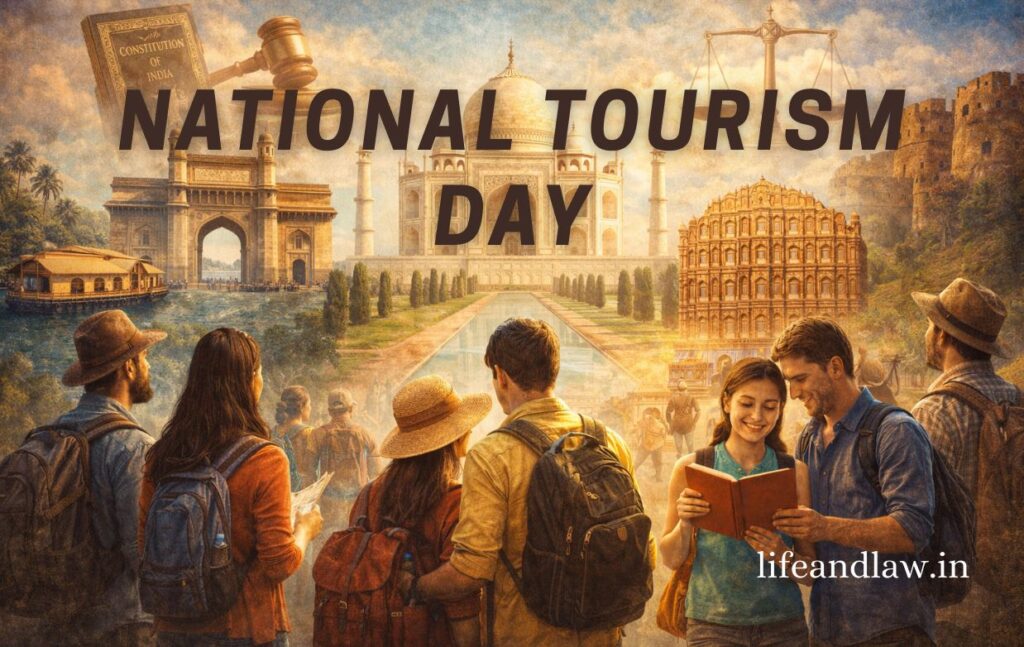
On January 25, India celebrates National Tourism Day to emphasise the importance of tourism as a driver of economic growth, cultural interchange, and national integration. From heritage buildings and pilgrimage circuits to eco-tourism, medical tourism, and adventure travel, India provides a broad range of experiences for both domestic and international visitors. However, tourism is more than just exploration and recreation; it is also about law, regulation, and the protection of traveler rights.
A strong legal framework guarantees that tourism operations are safe, ethical, and sustainable. Understanding the rules governing tourism allows travellers to protect themselves from exploitation while encouraging ethical travel. This article investigates how Indian law controls tourism and protects the rights of travellers.
Tourism in India has a well-defined legislative and administrative framework. At the national level, the Ministry of Tourism, Government of India, develops policies, promotes tourism, and works with state governments. States, in turn, use licensing and regulatory regulations to oversee hotels, transportation services, guides, and local tourism businesses.
Article 19(1)(d) of the Indian Constitution provides citizens the freedom to freely roam throughout its territory, subject to reasonable limits in the interests of public order, security, and environmental protection. Furthermore, Article 21, which guarantees the right to life and personal liberty, has been interpreted by courts to encompass the right to safety, dignity, and protection from arbitrary injury, all of which clearly apply to travellers.
India’s federal framework enables states to regulate tourism services while guaranteeing that fundamental rights are consistently maintained throughout the country.
Multiple laws control the tourism and hospitality industries, with the aim of assuring safety, hygiene, and fairness.
Hotels, lodges, and guest homes are expected to follow state licensing rules, local regulations, fire safety standards, and public health guidelines. These regulations require accommodation operators to meet minimal standards of safety and hygiene for guests.
Travel agencies and tour companies are subject to commercial regulations and government registration procedures. They are legally required to offer truthful information about trip packages, price, itineraries, and safety procedures. Misrepresentation or false promises may result in legal penalties.
Tourist transport services are subject to motor vehicle rules, railway regulations, and aviation legislation. These statutory frameworks protect passengers, license vehicles, and hold service providers accountable. These policies are intended to ensure a secure and reliable tourism ecosystem.
Tourists are legally acknowledged as customers under the Consumer Protection Act of 2019, as they use services for consideration. This recognition is critical for protecting travellers from unfair trade practices and poor treatment.
A visitor may seek legal redress for service deficiencies such as inadequate hotel facilities, cancelled trips without refund, misleading ads, or failure to supply promised services. The law also shields travellers from unfair pricing and fraudulent acts.
The Act creates a three-tier redressal mechanism—District, State, and National Consumer Disputes Redressal Commissions—that allows consumers to request refunds, compensation, and corrective action. This paradigm promotes responsibility in the tourism business and increases consumer confidence.
Traveler safety is a primary concern under tourism law.
Tourists are protected under general criminal laws against acts such as stealing, cheating, violence, and harassment. Law enforcement agencies are responsible for protecting travellers and responding to concerns in a timely manner. Article 14 of the Constitution guarantees equal protection of the laws, which means that international tourists have the same legal protections as Indian citizens.
Women and children travellers are given special protection under a variety of criminal and protective legislation. There is a special emphasis on preventing harassment, exploitation, and abuse in tourism sites. Government activities encouraging “safe tourism” reflect the legal requirement to provide dignity and security to all travellers.
Tourism must be compatible with environmental and cultural preservation.
Environmental regulations govern eco-tourism, wildlife tourism, and coastal tourism, prohibiting actions that could harm ecosystems. These laws strive to strike a balance between tourism development and environmental sustainability.
The Ancient Monuments and Archaeological Sites and Remains Act of 1958 protects India’s rich history by prohibiting damage, encroachment, and unlawful commercial activity around protected monuments. Tourists are legally required to follow these limits and protect national treasures.
Failure to comply with environmental and heritage preservation rules can result in penalties, reinforcing the notion that tourism comes with legal duties in addition to enjoyment.
Tourists have various legal rights, including the right to safety, correct information, reasonable pricing, and access to legal remedies. They are entitled to respectful treatment from service providers and public bodies.
At the same time, tourists bear legal and ethical responsibilities. These include honouring local laws, respecting religious and cultural sensibilities, conforming to environmental norms, and observing permit restrictions in limited regions. Travellers’ responsible behaviour helps to promote sustainable and harmonious tourism.
Legal awareness is crucial to defining the future of tourism. Tourism becomes safer and more ethical when travellers understand their rights and duties, and service providers follow regulatory guidelines.
Law serves as a link between economic development and social responsibility, ensuring that tourism benefits communities while maintaining safety, dignity, and sustainability.
Tourism thrives when it is backed by clear legal frameworks and safe travel practices. On National Tourism Day, it is important to remember that safe and meaningful exploration of India is dependent on regulations that govern services, protect consumers, and preserve cultural and natural heritage.
These comments echo the educational legal works of Adv. Abdul Mulla , who engages with topics of law and public awareness through his platforms www.lifeandlaw.in and www.asmlegalservices.in, focussing on understanding rights, duties, and the rule of law in daily life.
Adv. Abdul Mulla (Mob. No. 937 007 2022) is a seasoned legal professional with over 18 years of experience in advocacy, specializing in diverse areas of law, including Real Estate and Property Law, Matrimonial and Divorce Matters, Litigation and Dispute Resolution, and Will and Succession Planning. read more….
Copyright BlazeThemes. 2025