Loading ...

Life & Law

RECENT NEWS

From Courtrooms to Communities: Upholding Human Rights for All

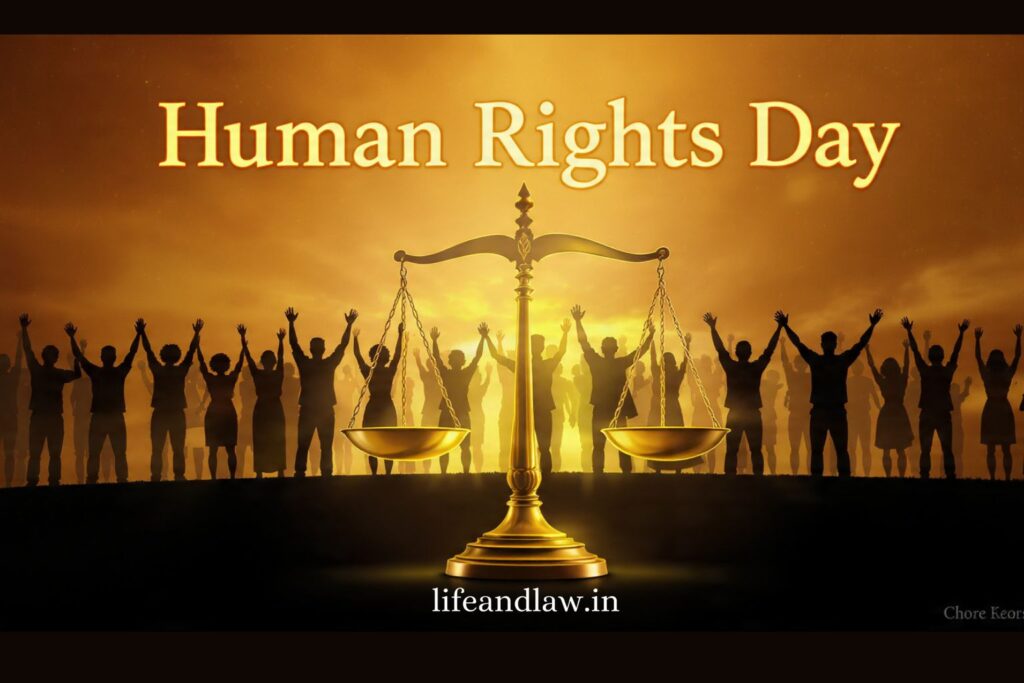
Human rights form the foundation of dignity, equality, and justice, influencing how people live and participate in society. Every year on December 10, the globe celebrates Human Rights Day, which commemorates the adoption of the Universal Declaration of Human Rights (UDHR) in 1948, a watershed moment that established universal norms for freedom and fairness. These rights are more than just legal concepts; they are everyday ideals that must be protected through knowledge and social responsibility.

The aim of this article is to show how courts, communities, and individuals collaborate to protect human rights, and why upholding these values is critical for creating a just, inclusive, and democratic society.

What Are Human Rights? – Understanding the Concept

Human rights are inherent and inalienable, and apply to all people regardless of nationality, gender, caste, religion, or social class. They are based on fundamental concepts including universality, equality, dignity, non-discrimination, accountability, and the rule of law. These rights ensure that all persons are treated fairly and respectfully.

Although the UDHR is not legally binding, it laid the groundwork for binding treaties such as the ICCPR and ICESCR, which comprise the International Bill of Human Rights. These instruments ensure basic protections—from life and liberty to education, labour, health, and social security—and require governments to preserve them.

Why Human Rights Matter – Their Impact on Society

Human rights affect every element of human life. They safeguard people from discrimination, violence, exploitation, and arbitrary state actions. Freedom of expression, the right to a fair trial, access to healthcare, education, a livelihood, and safe living conditions all contribute to people’s dignity and equality.

Human rights violations, such as custodial abuse, censorship, trafficking, discrimination, or denial of fundamental services, weaken society. Violations not only injure individuals, but also undermine trust in institutions, impede progress, and create social divides. Ensuring human rights protection encourages inclusive growth, societal harmony, and accountable governance. Simply put, a society that respects its rights thrives.

Legal Protection of Human Rights – National & International Frameworks

International Framework

The Universal Declaration of Human Rights established worldwide norms that influenced various international conventions:

• CEDAW – Eliminates discrimination against women.

• CRC – Protects children’s rights.

• CAT – Torture is prohibited.

• CRPD – Protects the rights of people with impairments.

These conventions, combined with monitoring by the United Nations Human Rights Council and other treaty bodies, ensure that countries are held accountable for promoting and defending human rights.

Indian Legal Framework

In India, the Constitution is the most powerful guardian of human rights.

Fundamental Rights (Articles 14-32) ensure equality before the law, freedom of expression and movement, protection from exploitation, religious freedom, and the right to life and personal liberty. The Supreme Court has defined Article 21—the right to life—as including the rights to dignity, privacy, a clean environment, housing, and legal help.

The Directive Principles of State Policy lead the state in ensuring social and economic rights like health, education, and fair working conditions.

The Protection of Human Rights Act of 1993 established the National Human Rights Commission (NHRC) and State Human Rights Commissions (SHRCs) to investigate abuses, recommend improvements, and raise awareness.

Together, these constitutional and statutory safeguards form a solid foundation for protecting human rights in India.

Role of Courts – Guardians of Human Rights

Courts play an important role in ensuring that human rights are not just theoretical, but also enforceable. The Supreme Court and High Courts protect citizens from state or government breaches through writ jurisdiction, public interest litigation (PILs), and judicial review.

Landmark decisions have greatly enlarged rights, including the right to privacy, the rights of women and minorities, protection against arbitrary detention, environmental rights, and the rights of prisoners. Courts also step in when administrative officials fail to defend rights, guaranteeing accountability and fairness.

While courts are strong guardians, their effectiveness is dependent on citizens’ understanding and willingness to seek justice. Legal remedies will not reach those in greatest need unless society participates.

Human Rights in Communities – Role of Citizens & Society

Human rights must be respected not only in the courtroom, but also in everyday settings such as homes, schools, businesses, streets, and public institutions. Community-level awareness is critical.
Citizens play a crucial role in:

• Identified and reported breaches.

• Helping victims.

• Rejecting discrimination.

• Promoting equality during daily interactions.

• Educating people about their rights.

NGOs, campaigners, the media, and legal aid organisations draw attention to abuses and empower victims. Community vigilance against child labour, domestic violence, trafficking, and social marginalisation is frequently the first step towards justice.

Challenges in Protecting Human Rights

Despite robust frameworks, numerous difficulties remain:

• Poverty and inequality limit access to rights.

• Custodial violence and discrimination persist.

• Judicial delays impede prompt justice.

• New concerns arise from digital issues such as privacy abuses, cyberbullying, and surveillance.

• Lack of awareness prevents many from seeking help.

To solve these obstacles, we must strengthen enforcement, train officials, improve legal literacy, and ensure faster justice delivery.

Conclusion

Human rights form the foundation of a just and equitable society. Courts give remedies, but communities cultivate principles, and individuals ensure that dignity and fairness prevail in everyday life. Human Rights Day serves as a reminder that protecting rights is a communal responsibility, not just the government’s.

As Adv. Abdul Mulla frequently emphasises in his legal writings on www.asmlegalservices.in and www.lifeandlaw.in, recognising our rights is the first and most important step towards defending them—shared knowledge, not advertising. Together, we can create a world where justice, equality, and human dignity are truly valued.

RECENT POSTS

CATEGORIES

Leave a Reply

Your email address will not be published. Required fields are marked *

Life And Law Blogs

Life & law provides valuable insights by simplifying complex legal concepts and connecting them to real-life experiences …read more

Why I write

At Life & law, my mission is simple. to make the law accessible and empower people with knowledge to confidently face life’s challenges …read more

Copyright BlazeThemes. 2025