Loading ...

Life & Law

RECENT NEWS

From Runways to Rights: Understanding International Aviation Law

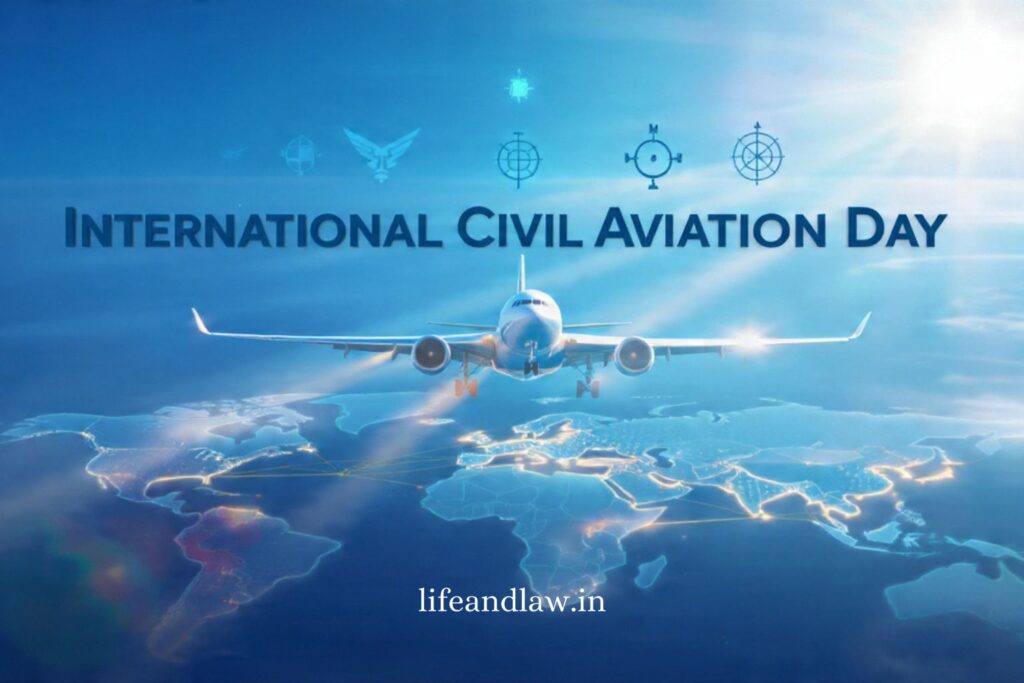
Every year on December 7, the globe celebrates International Civil Aviation Day, which recognises how aviation connects nations, cultures, and economy. ICAO established the day in 1994, and the UN endorsed it in 1996, to highlight the rising importance of safe, efficient, and collaborative air travel. As aviation grows and technology evolves, understanding the legal structures that govern international flights becomes increasingly important.

This article seeks to elucidate the complicated structure of international aviation law by describing how global norms, rights, and agreements influence current air travel. It takes readers on a trip “from runways to rights,” helping them comprehend the legal foundations that keep the skies safe and linked.

The Foundations of International Aviation Law

Modern aviation law is based on the Chicago Convention of 1944, a treaty signed by 52 states that laid the groundwork for international civil aviation and formed ICAO. One of its underlying ideas is that each state has total sovereignty over the airspace above its borders, necessitating international agreements for cross-border flights.

ICAO promotes global aviation harmony by releasing Standards and Recommended Practices (SARPs) across multiple Annexes that address safety, security, navigation, and environmental preservation.

Rights in the Air: The Freedoms of the Air

International flights are based on a tightly structured framework known as the Freedoms of the Air, which govern what airlines can do while crossing international borders. The first five freedoms include important rights like overflight, technical landings, and carrying individuals or cargo across countries, but these licenses are only provided through bilateral or multilateral agreements.

These agreements are critical for sustaining global connection, enabling efficient airline operations, and allowing states to retain control over their airspace.

Passenger Rights and Protections

Passenger rights are the most apparent feature of aviation law for travellers, intended to protect them from unjust treatment and enforce accountability. Key frameworks include the EU’s Regulation 261/2004, which offers compensation for delays, cancellations, and denied boarding, and the 1999 Montreal Convention, which establishes global norms for luggage issues, delays, and passenger injury or death.

With an increased emphasis on accessibility, authorities now mandate airlines and airports to help and accommodate customers with impairments.

Safety, Security, and Global Standards

Comprehensive legislation, stringent oversight, and global cooperation have all contributed to aviation’s great safety record. The ICAO establishes worldwide safety and security standards, including Annex 17, which focusses on preventing unlawful intervention. States must create State Safety Programs (SSP), whereas airlines and airports use Safety Management Systems (SMS) to detect and manage hazards.

ICAO analyses state compliance through initiatives such as USOAP, thereby increasing transparency and driving continuous improvement. In the post-9/11 era, nations work together to tackle terrorism, cyber threats, and drone-related hazards.

Environmental Responsibilities and Sustainable Aviation

The next frontier for aviation legislation is sustainability. Aviation contributes to global carbon emissions, and the world is striving for cleaner skies. The International Civil Aviation Organisation (ICAO) oversees projects such as CORSIA, which aims to reduce CO₂ emissions from international flights.

Along with offsetting, states and airlines are implementing new legislation to promote Sustainable Aviation Fuel (SAF), cleaner aircraft technology, and ecologically responsible airports. Noise-reduction requirements, fuel-efficiency norms, and long-term climate targets are all part of a global regulatory framework intended to make aviation more ecologically sensitive while maintaining connectivity.

Emerging Issues: UAVs, AI, and the Space-Aviation Overlap

Aviation is fast evolving due to the rise of Uncrewed Aircraft Systems (UAS), which raises legal concerns about airspace sharing, privacy, certification and safety. Countries are partnering with the ICAO to develop unified norms, while the use of AI in aviation raises new concerns about responsibility and regulatory supervision.

As space tourism grows, the distinction between airspace and outer space becomes less obvious, necessitating new legal frameworks.

Conclusion

On this International Civil Aviation Day, it is clear that aviation is more than just planes and runways; it is a worldwide system governed by regulations that protect passenger safety, promote sustainability, and allow for seamless travel.

This article, written by Adv. Abdul Mulla, a legal professional who provides views on www.asmlegalservices.in and www.lifeandlaw.in, examines how international aviation law evolves, preserving rights and keeping the sky connected.

RECENT POSTS

CATEGORIES

Leave a Reply

Your email address will not be published. Required fields are marked *

Life And Law Blogs

Life & law provides valuable insights by simplifying complex legal concepts and connecting them to real-life experiences …read more

Why I write

At Life & law, my mission is simple. to make the law accessible and empower people with knowledge to confidently face life’s challenges …read more

Copyright BlazeThemes. 2025