Loading ...

Life & Law

RECENT NEWS

Plagiarism and the Law: Understanding the Legal Ramifications of Copying

Accessing and sharing information has never been easier in the digital age, but this convenience has also increased the possibility of plagiarism—the act of taking someone else’s work or ideas without proper acknowledgement. While plagiarism is commonly considered as an academic issue, it can have major legal ramifications that extend beyond schools and workplaces, affecting professionals, writers, and content creators alike.

This article will look at the legal repercussions of plagiarism, explain how copyright laws protect original work, and offer advice on how to avoid legal problems while creating ethical and original content.

What is Plagiarism?

Plagiarism is the act of using someone else’s written, spoken, or creative work and passing it off as your own without permission or due citation. This includes copying text, photographs, videos, and even ideas or concepts. Although plagiarism is commonly regarded as a kind of cheating in educational settings, it is also a legal offence punishable by civil or criminal consequences.

Legal Ramifications of Plagiarism

In most circumstances, plagiarism constitutes a breach of intellectual property laws, particularly copyright law. The word “intellectual property” refers to legal protection for mental works such as writings, inventions, and designs. Copyright law protects original works of authorship, such as literary works, art, music, and even software.

When someone plagiarises a copyrighted work, they violate the creator’s rights, which can result in serious legal penalties. These can be divided down into civil and criminal consequences:

  1. Civil Lawsuits

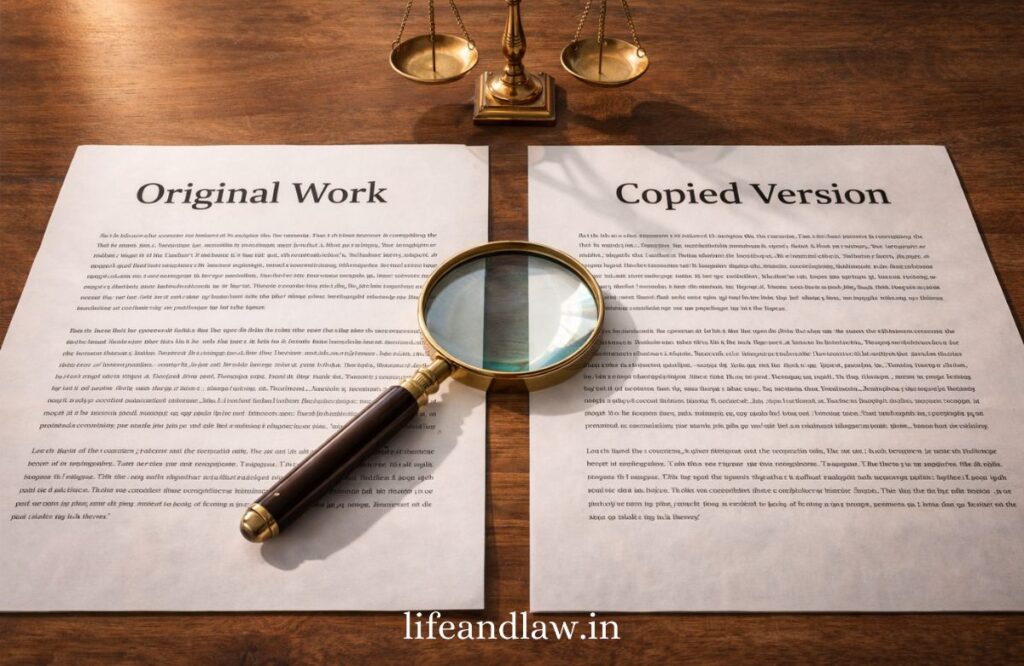
The most common legal consequence of plagiarism is a civil lawsuit for copyright infringement. A copyright holder may sue anyone who utilises their work without permission. The damages from such claims might be substantial, particularly if the infringement profited from the pirated work.

For example, In 2007, a well-known case included the plagiarism of a song by the band The Verve. The song “Bitter Sweet Symphony” was found to have plagiarised a riff from The Rolling Stones’ song “The Last Time.” As a result, The Verve had to hand over 100% of their income to The Rolling Stones’ songwriting team.

  1. Criminal Penalties

While civil actions are more usual, in some situations, plagiarism can result in criminal charges. For example, under the Copyright Act of 1976, wilful infringement of copyright law, particularly for economic benefit, may result in criminal penalties. For repeat offenders, criminal copyright infringement can result in fines of up to $250,000 and imprisonment for up to five years.

While criminal prosecution for plagiarism is uncommon, it can occur when persons are discovered to have knowingly infringed on copyrights for financial benefit or to deceive others. This could include selling plagiarised works, producing counterfeit goods, or spreading pirated content.
Plagiarism in the Digital Age

With the rise of the internet and digital media, plagiarism has taken on new forms and become more common. Digital information, including blogs, websites, social media posts, and YouTube videos, is frequently shared, reproduced, or repurposed without due attribution. The ease of copying and pasting from internet sources raises the risk of plagiarism, making it a key problem for artists in the digital era.

For example, someone may copy and republish a famous blog post on their own website. If the original author detects the infringement, they may file a legal action to remove the stolen content or seek damages. Websites such as Copyscape and Turnitin  are frequently used to discover cases of content theft.

The rise of “content farms”—websites that collect content from other sites and post it without permission—has also raised legal concerns. These websites frequently steal written content from a variety of sources in order to boost their search engine ranks, benefitting off the intellectual property of others.

Defending Against Plagiarism Claims

If you’re accused of plagiarism, there are a few defences you can use in court:

  1. Fair use: One popular defence against plagiarism charges is that the material was copied for “fair use.” Fair use allows for limited copying of copyrighted work for reasons such as commentary, criticism, news reporting, teaching, or research. However, this is a complex legal doctrine that is determined by elements like the purpose of the use, the amount copied, and whether the usage has a detrimental influence on the market for the original work.
  2. No infringement: Another conceivable defence is that the accused did not copy the work on purpose, or that the work in question was never copyrighted.
  3. License/Permission: If the infringer got a license to use the work or received permission from the copyright holder, they could claim the right to utilise the material.

How to Avoid Plagiarism

Given the legal implications, it is critical to take efforts to avoid plagiarism:

  1. Proper Citation: Always give credit to the original creator of any work you utilise, whether it’s words, ideas, or images. Based on your field or platform, use citation formats such as MLA, APA, or Chicago.
  2. Use Plagiarism Detection Tools: Before submitting or publishing your work, use platforms such as Turnitin, Grammarly, or Copyscape to check for unintended plagiarism.
  3. Seek Permission: If you want to use copyrighted material beyond the “fair use” guidelines, you must acquire permission from the creator or pay for licensing.
  4. Create original content: Whenever feasible, produce your own work. This is the greatest strategy to prevent legal complications while maintaining reputation.

Conclusion

Plagiarism is both an ethical and a legal issue, with severe penalties, litigation, and reputational harm. In today’s digital age, where stealing content is easier than ever, recognising the legal ramifications is critical.

Adv. Abdul Mulla emphasises the necessity of adhering to intellectual property rules, properly citing sources, and creating original content. Resources such as  www.lifeandlaw.in and www.asmlegalservices.in can help you learn more about intellectual property rights and other legal topics.

RECENT POSTS

CATEGORIES

Leave a Reply

Your email address will not be published. Required fields are marked *

Life And Law Blogs

Life & law provides valuable insights by simplifying complex legal concepts and connecting them to real-life experiences …read more

Why I write

At Life & law, my mission is simple. to make the law accessible and empower people with knowledge to confidently face life’s challenges …read more

Copyright BlazeThemes. 2025