Loading ...

Life & Law

RECENT NEWS

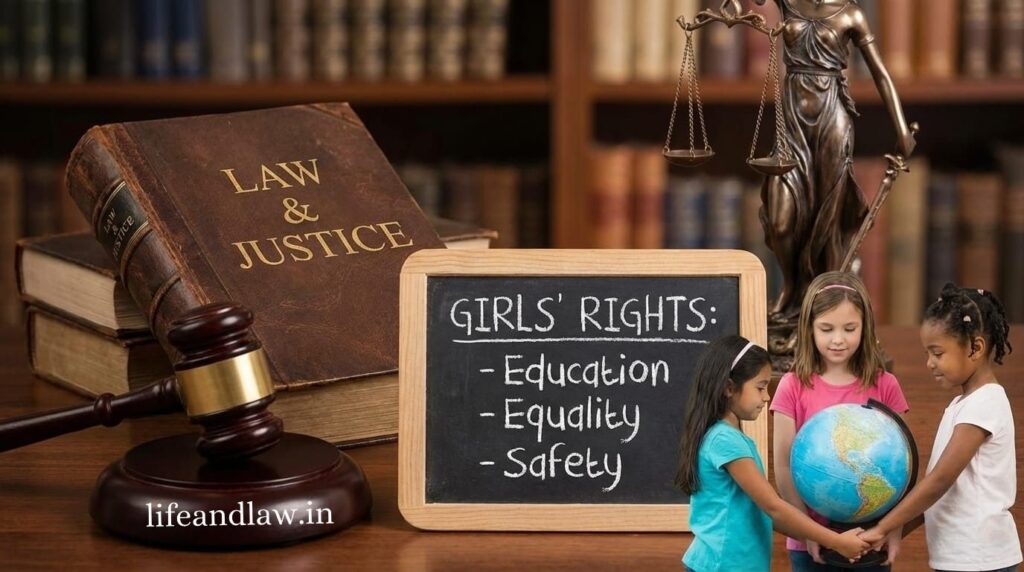
Law and Girls’ Rights: A Strong and Secure Future

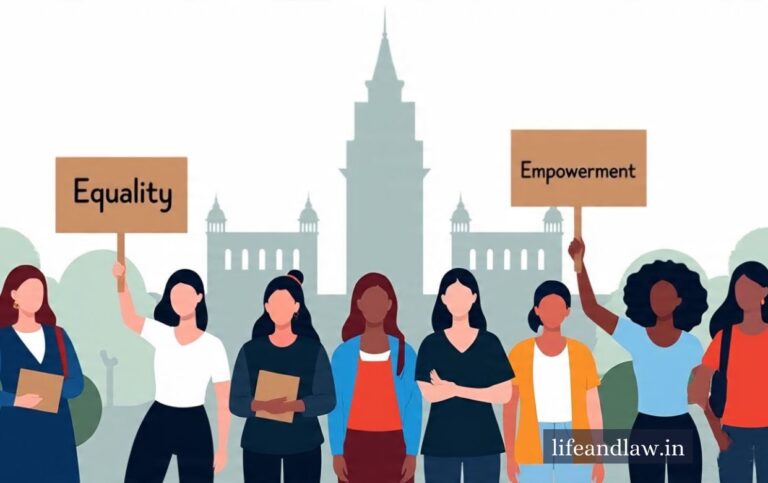
Awareness of girls’ fundamental rights, such as education, healthcare, and safety, is critical. Despite India’s rich history and tradition, females have historically endured prejudice and continue to confront difficulties such as female foeticide, child marriage, a lack of education, and gender inequity. In this situation, protecting and empowering girls has become a vital social obligation.

Laws play a critical part in transforming girls from vulnerable to empowered. India has implemented a number of legal regulations to promote equality and increase girls’ rights in education, health, safety, and property. The aim of this article is to highlight these regulations, explain their significance, and stress the importance of awareness and successful execution.

Girls’ Rights in the Indian Constitution

The Indian Constitution lays a high emphasis on protecting and empowering girls, with explicit clauses ensuring equality, dignity, and opportunities. Through many sections, the Constitution protects girls from discrimination and fosters their overall development in social, educational, and economic areas. These constitutional protections provide the legal framework for gender justice and women’s empowerment in India.

 Article 14: Right to Equality for All Citizens

Article 14 guarantees equality under the law to all citizens, including girls. It requires equal treatment and protection, which helps to decrease discrimination and provide girls with equitable access to opportunities in all aspects of life.

Article 15 (3): Right to Make Special Provisions for Women

This provision allows the government to enact special legislation and programs for women and girls. Such provisions encourage affirmative action programs, particularly in education and social welfare.

Article 21: Right to Life and Personal Liberty

Article 21 guarantees girls the right to live in dignity, safety, and personal independence, which serves as the foundation for their fundamental human rights.

Article 39: Equal Pay and Equal Opportunities for Women

This article promotes economic equality by ensuring that women and girls receive equal pay and opportunity in education, employment, and social involvement.

Important Laws and Protections for Girls

India has built a solid legal framework to defend girls’ rights, ensuring their safety, dignity, and empowerment. These laws cover a wide range of issues affecting girls’ life, including family welfare, education, job safety, criminal prevention, and economic independence. Together, they hope to establish an environment in which girls may grow in safety, equality, and chances for holistic development.

Family and Social Laws

The Hindu Child Marriage Restraint Act, 1929

This Act establishes the minimum legal marriage age for girls as 18 years, rendering child marriages invalid. By banning early marriage, the law protects girls’ physical and mental health while also allowing them to pursue education and personal growth. Its implementation has had a substantial impact on increasing girls’ quality of life, eliminating exploitation, and encouraging long-term empowerment.

The Protection of Women from Domestic Violence Act, 2005

This law protects women and girls from domestic violence and recognises it as a severe criminal. It allows victims to seek justice through legal means and provides institutional support, protection orders, and aid programs. The Act is critical in combating violence motivated by familial and social forces.

Right to Education

Right to Education Act, 2009

The Right to Education Act ensures free and compulsory education for girls aged 6 to 14. It encourages equitable access to education, eliminates gender discrimination, and creates an inclusive learning environment. This law has resulted in greater school enrolment and educational possibilities for girls throughout the country.

Workplace Safety

Sexual Harassment of Women at Workplace (Prevention, Prohibition, and Redressal) Act, 2013

This Act protects women and girls from sexual harassment in the workplace, both public and private. It establishes preventive methods, internal complaint committees, and harsh sanctions to ensure girls’ dignity, safety, and equal participation in professional settings.

Laws Against Crimes and Offenses

The Protection of Children from Sexual Offences Act, 2012

The POCSO Act offers girls extensive protection against sexual abuse, including harsh penalties and child-friendly legal procedures. It ensures quick justice and increases protections against exploitation.

Rape Laws under BNS

The Bharatiya Nyaya Sanhita, 2023, provides enhanced protection for girls through rigorous rape sentences, as well as legal aid and rehabilitation programs.

Economic and Property Rights

The Hindu Succession Act, 2005

This Act gives girls equal inheritance rights in parental property, addressing historic inequality while encouraging financial independence and economic development.
Government Schemes for Empowerment of Girls

The Indian government has launched a number of projects aimed at empowering girls by boosting their education, safety, and economic development.

Beti Bachao, Beti Padhao Yojana

Sukanya Samriddhi Yojana

Ujjwala Yojana

Pradhan Mantri Jan Dhan Yojana

National Commission for Women

Through these programs, significant measures have been taken to empower girls, allowing them to become strong, safe, and self-sufficient.

What Should Girls Do to Assert Their Rights?

Protecting and promoting girls’ rights necessitates attention beyond physical protection to mental, educational, and social development. In today’s social setting, encouraging girls to understand and assert their rights is critical for achieving equality and dignity. The following measures play an important part in this process:

Education: Girls’ empowerment begins with education. It promotes confidence, right knowledge, and self-reliance. Along with school and higher education, participation in vocational and skill-based programs allows females to develop practical skills while also improving their social and professional standing.

Skills Development: Skill development is essential for economic independence. Girls can become self-sufficient and entrepreneurial by receiving training in a variety of disciplines and having access to government programs such as Prerna Yojana and Startup India.

Legal awareness: Knowledge of legislation governing women’s rights, sexual harassment, domestic abuse, and child safety enables girls to protect themselves and seek justice when necessary.

Social awareness: Girls may help to bring about constructive social change and collective empowerment by raising awareness and combating discrimination and injustice.

Digital safety awareness: Awareness of online safety, privacy protection, and legal measures against digital risks is critical in today’s digital environment. 

Together, these policies help girls preserve their rights and achieve equality in society.

Conclusion

India has adopted various laws to protect and empower females in a variety of sectors, including family life, education, employment, and crime prevention. These legal reforms recognise girls’ rights and promote their general development, but their full impact is dependent on public awareness and efficient execution.

According to the author, Adv. Abdul Mulla, legal knowledge through platforms such as www.lifeandlaw.in and www.asmlegalservices.in can assist build understanding of rights and duties, resulting in a more just, respectful, and secure future for females.

RECENT POSTS

CATEGORIES

Leave a Reply

Your email address will not be published. Required fields are marked *

Life And Law Blogs

Life & law provides valuable insights by simplifying complex legal concepts and connecting them to real-life experiences …read more

Why I write

At Life & law, my mission is simple. to make the law accessible and empower people with knowledge to confidently face life’s challenges …read more

Copyright BlazeThemes. 2025