Trending
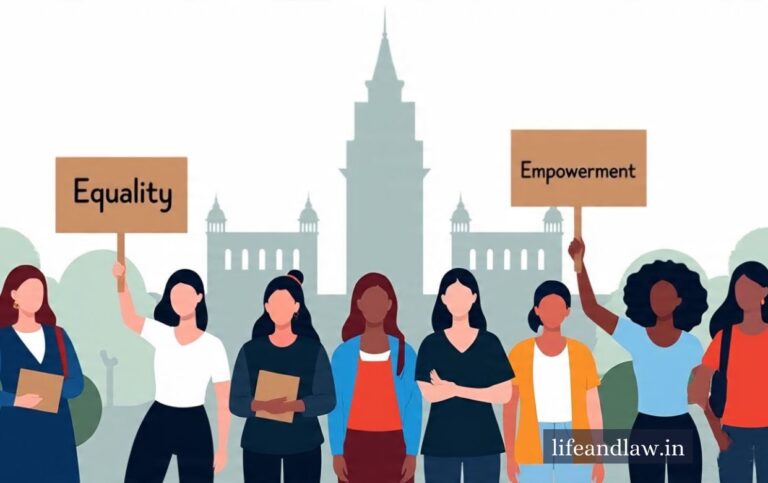
Violence against women remains one of the most common abuses of human rights in the world. It affects women of all ages, backgrounds, and communities, and takes many forms, including domestic abuse, job harassment, cybercrime, sexual violence, stalking, and more. Although India has robust laws to protect women, the true difficulty is raising awareness and enforcing them.
The aim of this article is to clarify the legal safeguards accessible to women in India, including constitutional and statutory protections, and to encourage women to understand their rights. Increasing legal information is the first step towards empowering people and preventing violence.
Violence against women includes any act that causes physical, mental, emotional, sexual, or financial harm to a woman. Domestic violence, sexual assault, harassment, stalking, forced marriage, dowry harassment, trafficking, and digital abuse are among the issues addressed. These acts are harmful not only to the victim, but also to their families and society as a whole.
Many women are hesitant to disclose abuse because of social stigma, fear of revenge, or a lack of information about legal options. This makes awareness and legal literacy critical. Understanding these types of violence is essential for prevention and quick intervention.
The Indian Constitution sets a solid foundation for women’s rights and protection.
• Article 14 guarantees equality before the law.
• Article 15 forbids discrimination based on gender.
• Article 21 ensures the right to life and dignity, including protection from assault, harassment, and exploitation.
Indian courts have regularly construed these rights as safeguarding women’s autonomy, privacy, and personal liberty. These constitutional protections form the foundation of all women’s legislation.
Several clauses in the Bharatiya Nyaya Sanhita (BNS) protect women against physical and sexual violence.
• Section 74: Assault or use of unlawful force on a lady with the purpose to violate her modesty.
• Section 75: Sexual harassment includes uninvited physical contact, requests for sexual favours, and the display of pornography.
• Section 77: Stalking can occur both physically and online.
• Sections 63 and 64: Rape laws involve consent, force, coercion, and punishment.
• Section 85 and 86: Cruelty by the spouse or his relatives, including mental or physical harassment.
• Section 79: Insulting a woman’s modesty with words, gestures, or actions.
Women have the right to file a Zero FIR, even if the incidence occurred outside of their jurisdiction. Police are legally required to file complaints regarding crimes against women.
a.Domestic Violence Act of 2005.
This act protects women from physical, emotional, sexual, and financial abuse. It offers protection orders, residency rights, monetary relief, child custody orders, and assistance through Protection Officers.
b. Sexual Harassment at Workplace Act of 2013.
This law defines workplace harassment and requires all employers to establish an Internal Complaints Committee (ICC). It provides safe and courteous work settings for women.
c. Dowry Prohibition Act (1961)
This act punishes dowry demands, dowry harassment, and dowry giving or taking.
d.Child Marriage Prohibition Act (2006)
This law forbids child marriage and protects minor girls from exploitation.
e.POCSO Act of 2012.
POCSO protects kids from sexual offences by establishing child-friendly investigation and trial procedures.
f. Anti-trafficking laws.
The Immoral Traffic Prevention Act (ITPA) punishes trafficking, exploitation, and abuse of women and children.
Cyberstalking, threats, manipulated images, revenge porn, and online harassment are all examples of rising digital violence. Important legal protections include:
• Section 66E: A violation of privacy.
• Sections 67 and 67A: Publishing profane or sexually explicit content online.
Women can register complaints with local police, cybercrime cells, or the National Cyber Crime Reporting Portal.
When faced with violence, women have a variety of options:
• Submit a FIR or Zero FIR to any police station.
• Emergency helplines: 112, 181, 1091, Women’s Helpline, and Cybercrime Portal.
• Access to protection officers, non-governmental organisations (NGOs), and shelter homes.
• Government services provide free legal aid, medical care, and support through fast-track courts.
Women have the right to secrecy, medical care, privacy, and protection from intimidation during the inquiry and trial process.
Ending violence takes more than simply laws; it necessitates a concerted communal effort. Schools, universities, businesses, and community organisations must all encourage gender sensitivity and understanding. Encouraging bystander action and teaching young boys and men can help change social views. Society must support survivors rather than shame them.
Despite strict regulations, violence persists owing to a variety of factors:
• Social stigma and fear of reprisal.
• Delayed justice and delayed investigations.
• Limited awareness of rights.
• Authorities lacked sensitivity.
• Insufficient legal and psychological help.
Improving legal awareness, training police and judicial officers, and making legal aid more available can all significantly improve implementation.
Women’s safety extends beyond legal protection; it is a shared social and human obligation. Strong regulations exist in India, but their true impact is contingent on proper enforcement and public awareness. Empowerment comes when women clearly understand and confidently claim their rights.
This viewpoint is frequently articulated by legal professionals such as Adv. Abdul Mulla, who blogs on platforms like www.asmlegalservices.in and www.lifeandlaw.in to promote informed legal understanding without any promotional aim.
Adv. Abdul Mulla (Mob. No. 937 007 2022) is a seasoned legal professional with over 18 years of experience in advocacy, specializing in diverse areas of law, including Real Estate and Property Law, Matrimonial and Divorce Matters, Litigation and Dispute Resolution, and Will and Succession Planning. read more….
Copyright BlazeThemes. 2025