Trending
Every child contains inside them a universe of potential — a future scientist looking at the heavens, a budding artist colouring the world with imagination, a dreamer eager to make a difference. Each dream, however, requires one basic premise: the preservation of their rights.
As we commemorate Children’s Day on 14 November, the birth anniversary of Pandit Jawaharlal Nehru, we recognise not just his great love for children, but also his vision of a nation in which every child can develop with dignity, safety, and opportunity. This year’s theme, “Little Rights, Big Dreams,” emphasises that children’s aspirations can only blossom if their fundamental rights are recognised, protected, and realised.
Children’s rights are more than just ideals; they are legal entitlements that guarantee every child’s freedom, safety, and happiness. They include the rights to education, safety, health care, identification, participation, and freedom from exploitation.
Globally, these rights are protected by the United Nations Convention on the Rights of the Child (UNCRC), which was ratified in 1989. The Convention emphasises that children are not passive dependents, but rather persons with their own voices and choices. It asks all countries to treat children with care, respect, and justice.
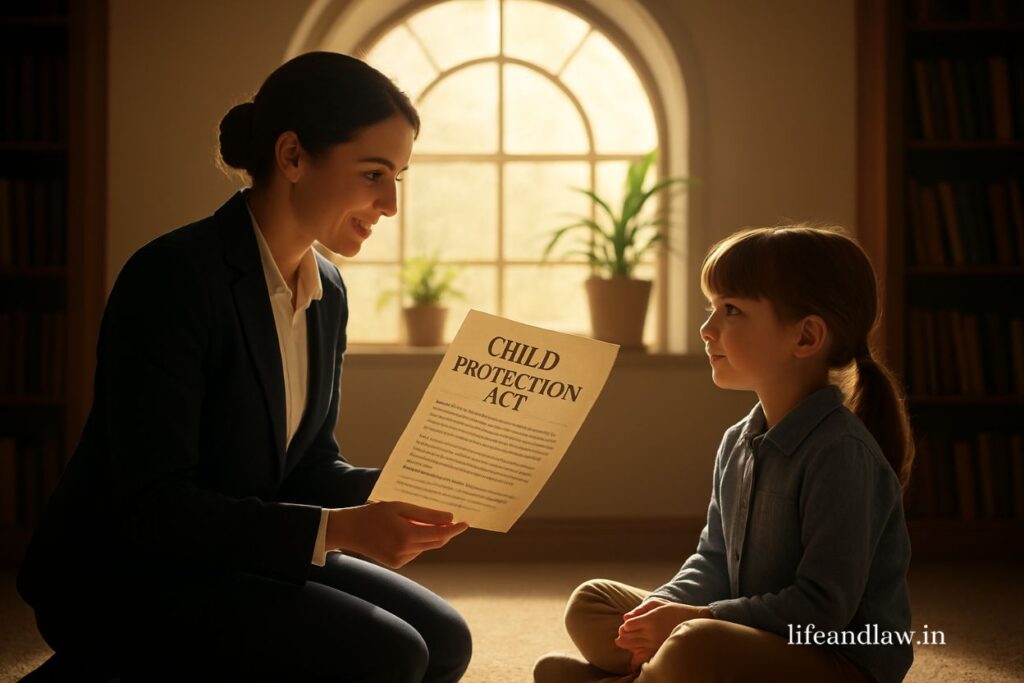
In India, the Constitution and other laws support this commitment. Article 21A protects the Right to Education for children aged six to fourteen. Article 24 forbids child labour, while Article 39(e) and (f) direct the state to protect children from abuse and promote healthy development. Statutes like the Juvenile Justice (Care and Protection of Children) Act, 2015 and the Protection of Children from Sexual Offences (POCSO) Act, 2012 bolster the legal protections for young people. Together, these frameworks reinforce a single message: every child deserves equal parts justice and joy.
Behind every sparkling grin is the silent promise of safety. The law plays an important role in upholding that promise. It ensures that children are not exploited in workplaces, are not hushed by fear, and are not denied educational opportunities due to poverty or discrimination.
Throughout the country, child protection units, juvenile justice boards, and legal aid authorities work relentlessly to defend children’s rights. NGOs and activists work alongside these systems to rescue, rehabilitate, and reintegrate children who have been abused, neglected, or trafficked.
For example, when a young girl from a rural hamlet was denied schooling owing to discrimination, a legal intervention under the Right to Education Act not only returned her to the classroom but also spurred other youngsters to fight for their proper place in school. Such anecdotes serve as a reminder that, when actively enforced, the law has the power to transform young people’s lives.
Children’s rights are not acts of compassion, but guarantees of justice. Protecting them is not an option; it is a moral and legal obligation.
When a child’s rights are upheld, their dreams take flight. The right to education illuminates the route to empowerment. The right to protection provides a safe environment for imagination to flourish. The right to participate educates youngsters that their voices are important in families, schools, and communities.
Each right is a step closer to realising a dream: a classroom full of curious students, playgrounds filled with joy, and safe homes for children. Nehru once stated, “The children of today will make the India of tomorrow.” By preserving their rights, we are creating a future based on equality, compassion, and justice.
However, the road ahead remains uneven. Despite progressive laws, millions of children continue to suffer difficulties such as child labour, early marriage, abuse, starvation, and a lack of access to a quality education. In the digital age, children face new issues including cyberbullying, online exploitation, and privacy threats.
The gap between law and implementation frequently leaves vulnerable children voiceless. Many families are still unaware of legal safeguards, and rural areas struggle to access justice systems. If rights are to be more than just words on paper, they must be promoted and enforced simultaneously.
Children’s rights cannot be maintained alone by legislation; they require the collective conscience of society. Parents must encourage open communication, instructors must educate students about their rights, and communities must provide safe environments for all children to study and flourish.
Schools can organise legal rights awareness campaigns; youth volunteers can support helplines and child welfare institutions; and the media can spotlight stories of change rather than silence. Each modest act of awareness contributes to a greater culture of accountability.
Empathy, education, and equality are the foundations of a child-friendly society. When we listen to children and allow them to make decisions, we prepare them not only for success but also for responsible citizenship.
This Children’s Day, we commemorate not just the joys of childhood, but also the justice and protection that all children deserve. Laws and acts of kindness all contribute to a safer, fairer world in which children can grow, learn, and dream without fear.
Adv. Abdul Mulla emphasises that protecting little rights fosters big dreams, thereby influencing the future we all wish for. He promotes ideas on child rights and legal awareness through his platforms, www.lifeandlaw.in and www.asmlegalservices.in, emphasising information and empowerment over promotion.
Adv. Abdul Mulla (Mob. No. 937 007 2022) is a seasoned legal professional with over 18 years of experience in advocacy, specializing in diverse areas of law, including Real Estate and Property Law, Matrimonial and Divorce Matters, Litigation and Dispute Resolution, and Will and Succession Planning. read more….
Copyright BlazeThemes. 2025