Loading ...

Life & Law

RECENT NEWS

What is Adoption? – Simple and Basic Information

In society, it is critical to ensure that every child has a safe and caring home. Some children are deprived of their parents’ affection from birth, while others are removed from their parents for various reasons. For these youngsters, the concept of adoption becomes critical.

The adoption procedure is not only for children, but it also provides a chance for those who want to become parents. This process is socially, emotionally, and legally significant, and it deserves careful study.

The aim of this article is to provide basic information on the concept of adoption and to explain its significance in society.

What is Adoption?

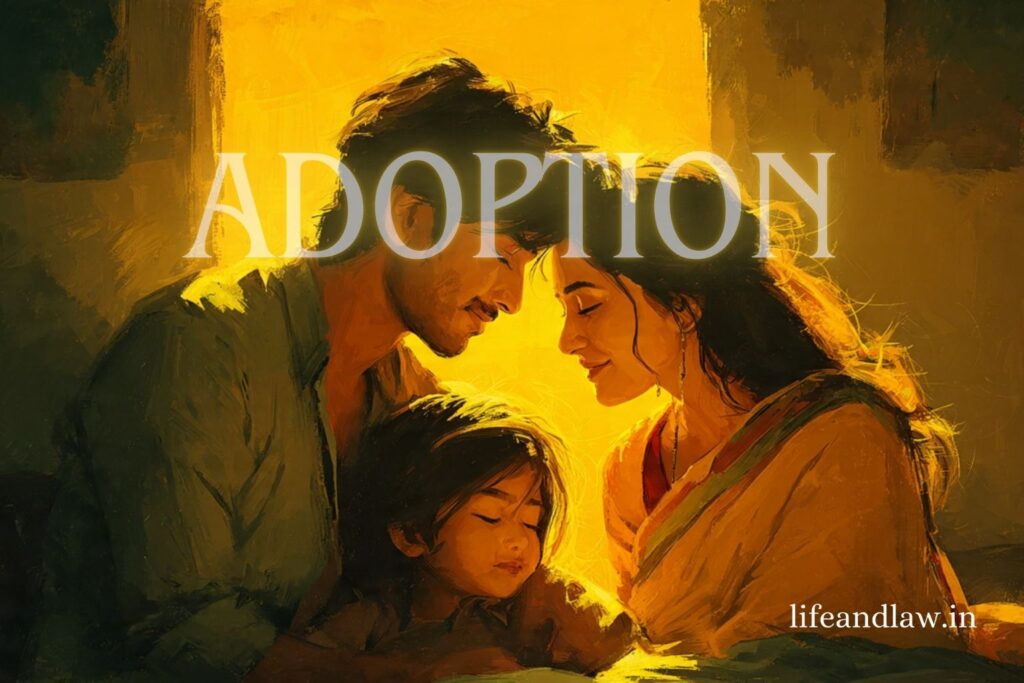
Adoption is the legal process of incorporating a kid into one’s own family. The child is legally transferred from the biological parents to the new parents and joins the new family. After adoption, the child receives all of the same rights and duties as a biological child.

Basic Difference Between Natural Parenthood and Adoptive Parenthood

Natural Parenthood: After birth, a child naturally receives his or her biological parents.

Adoptive Parenthood: A child is adopted by new parents who have complete parental rights and duties for him or her.

Natural parentage confers rights and duties at birth, whereas adoptive parenthood requires legal acquisition.

Who Can Adopt and Who Can Be Adopted?

Who can adopt?

Married couples or single parents (under specified situations).

Individuals with specific financial and mental stability.

People of distinct age groups have certain legal limits.

Who can be adopted?

Children who are orphaned, abandoned, or have lost their parents

Children eligible for adoption (based on age and other factors)

Need of Adoption

Adoption benefits not just the children and parents, but also society as a whole. It helps millions of orphaned and homeless children in India find stable, loving families and a brighter future.

Opportunities for Orphaned and Homeless Children

Adoption can provide a fresh life for orphaned youngsters. They can receive proper education, healthcare, and a safe environment, all of which they would not otherwise have access to.

1.Opportunity for Parenthood

Many couples are unable to conceive children naturally. In such instances, adoption becomes an ideal solution for them to embrace motherhood.

2. Promoting Balance and Harmony in Society

Adoption fosters greater mutual love, understanding, and responsibility in society. It promotes social stability and balance.

3. Basic Rights and Protection.

Every child is entitled to love, safety, and family support. These rights are recognised during the adoption procedure.

4.Positive impact for the country’s future

Children who acquire an education and a proper upbringing grow up to be responsible and educated citizens, positively contributing to the growth of society and the country.

Benefits of Adoption

1.Benefits to Children

Adoption gives children a new beginning by offering a stable, secure, and loving home. They get safety, emotional support, better education, and more possibilities, allowing children to grow confidently and steadily.

2. Benefits to Parents

Adoption offers great delight to parents, particularly those who are unable to have children naturally. It broadens the family, boosts domestic happiness, and enables parents to make a good contribution by caring for an orphan or neglected child.

3. Positive impact on society.

Adoption helps society by reducing the number of orphans and giving them a better future. As more families adopt, it promotes social harmony and compassion, as well as responsibility.

Laws Related to Adoption in India

In India, the adoption procedure is governed by different regulations. The Hindu Adoption and Maintenance Act of 1956 (HAMA) oversees the adoption procedure among Hindus, Buddhists, Jains, and Sikhs. This law allows both married and unmarried individuals to adopt, but certain criteria apply.

Individuals of various religions can lawfully adopt a child under the Juvenile Justice (Care and Protection of Children) Act, 2015 (JJ Act), which applies to all religions.

This statute requires the Central Adoption Resource Authority (CARA), a government organisation, to oversee the entire adoption process. Adopted children have the same rights as biological children and become the legal heirs of their new family.

Conclusion

Adoption is more than just a legal procedure; it involves love, care, and duty. It gives orphaned and abandoned children a new start, assuring family support, protection, and possibilities for a brighter future.

Adoption allows couples and single parents to enjoy parenthood while also contributing positively to society. Advocates like Adv. Abdul Mulla raises the societal value of adoption and assists families in navigating the legal procedure through their work and advises on platforms such as www.asmlegalservices.in and www.lifeandlaw.in.

RECENT POSTS

CATEGORIES

Leave a Reply

Your email address will not be published. Required fields are marked *

Life And Law Blogs

Life & law provides valuable insights by simplifying complex legal concepts and connecting them to real-life experiences …read more

Why I write

At Life & law, my mission is simple. to make the law accessible and empower people with knowledge to confidently face life’s challenges …read more

Copyright BlazeThemes. 2025