Trending
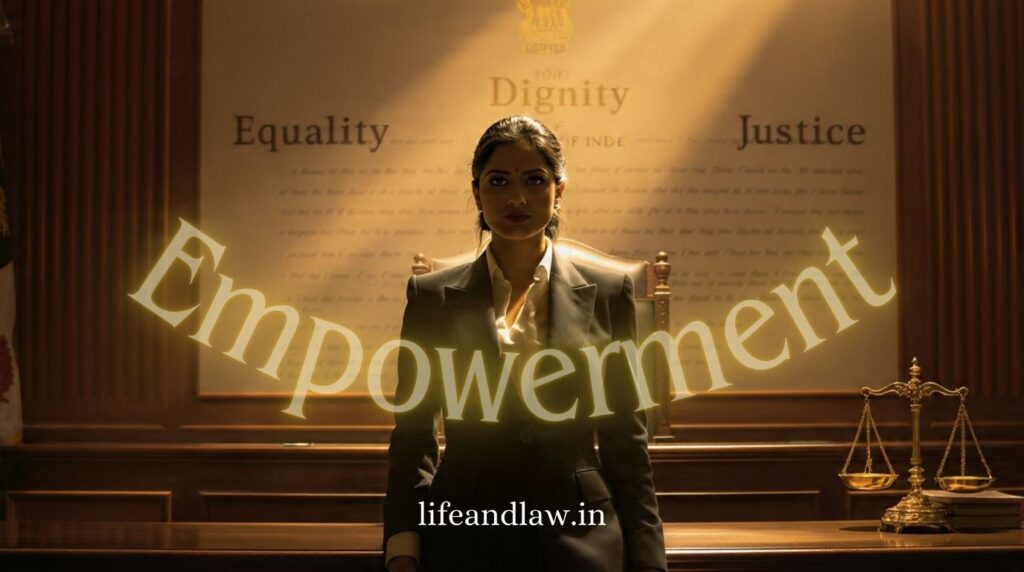
Women’s empowerment extends beyond equality to making women self-sufficient by making them aware of their rights. The Indian Constitution guarantees women’s equal rights, and various legislation, including the Domestic Violence Prevention Act, Dowry Prohibition Act, Sexual Harassment at Workplace Act, and Hindu Succession Act, seek to protect and empower them. Despite these legal safeguards, many women continue to encounter discrimination due to a lack of understanding.
The aim of this article is to raise knowledge of women’s legal rights and advocate their effective utilisation. Understanding and implementing these rights allows women to fight patriarchal ideas and contribute to the development of a successful, just, and equitable society.
The Indian Constitution provides women with certain essential rights aimed at their protection and empowerment. These rights contribute to equality, independent identity, and freedom from exploitation. They play a critical role in ensuring women’s social, economic, and legal rights in society.
The Right to Equality (Article 14)
All residents are guaranteed equality before the law, and women are given equal opportunity free of gender discrimination.
Right Against Discrimination (Article 15)
Discrimination based on gender is prohibited, and the state may enact special laws and programs to promote women’s social and economic development.
Right to Equal Employment (Article 16)
Ensures women have equal opportunity in government positions and employment.
Protection against Exploitation (Article 23)
Protects women from forced labour, human trafficking, and other types of exploitation.
India has passed a number of strict regulations to safeguard women’s safety, dignity, and empowerment. These laws are intended to prevent violence, harassment, exploitation, and discrimination while also protecting women’s legal, social, and economic rights in all areas of life.
Bharatiya Nyaya Sanhita (BNS),2023
The BNS has strict regulations to protect women from serious crimes. It specifies harsh punishment for rape, gang rape, sexual exploitation, kidnapping, molestation, and indecent actions, with penalties ranging from long-term incarceration to life in prison, and even the death sentence in exceptional situations.
Sexual Harassment Prevention Act (POSH Act of 2013)
The POSH Act protects women in the workplace from sexual harassment. It applies to all organisations and requires the development of an Internal Committee to resolve complaints and ensure a safe work environment.
THE IMMORAL TRAFFIC (PREVENTION) ACT, 1956
This law focuses on avoiding women’s trafficking and coerced sexual exploitation. It punishes those who force women into prostitution or profit from such exploitation, playing an important role in combating human trafficking.
The Child Sexual Abuse Prevention Act (POCSO Act, 2012)
The POCSO Act protects minors under 18 from sexual abuse. It establishes harsh penalties for offenders and includes provisions for the care, protection, and rehabilitation of afflicted children.
Hindu Marriage Act,1955
This Act governs Hindu marriages by specifying the legal marriage age, requiring registration, and fully outlining divorce procedures. It helps to identify rights and responsibilities in marriage.
The Muslim Women (Protection of Rights on Marriage) Act,2019
This law criminalises Triple Talaq and protects Muslim women by establishing justice, dignity, and equality in marriage.
Hindu Succession Act,1956
The Act ensures daughters have equal inheritance rights in their father’s property, promoting women’s economic independence and empowerment.
The Protecting Women from Domestic Violence Act,2005
This law protects women against physical, mental, economic, and sexual abuse by assuring their right to residency, financial support, and urgent legal protection.
The Dowry Prohibition Act,1961
It criminalises both giving and receiving dowry and punishes those who harass women for it, therefore combating a pervasive social evil.
Stridhan Rights
Indian law recognises a woman’s complete ownership of her stridhan, including gifts and treasures, which ensures her financial security.
The Equal Remuneration Act,1976
This Act assures equal compensation for equal effort and prohibits wage discrimination against women in the workplace.
The Maternity Benefit Act,1961
It offers paid maternity leave and other critical services to working women, promoting maternal health and childcare.
Both the federal and state governments have implemented a number of welfare programs to help women in their economic, social, and educational lives. These projects seek to improve women’s quality of life, encourage self-reliance, and provide equitable opportunities in education, work, and entrepreneurship.
Beti Bachao, Beti Padhao Yojana
The aim is to avoid female foeticide while also supporting girls’ education and overall development.
Pradhan Mantri Ujjwala Yojana
Women in rural homes benefit from clean cooking fuel, which improves their health and quality of life.
Mahila Shakti Kendra Yojana
Provides training, skill development, and job placement assistance to empower rural women.
Stand-Up India Scheme
Helps women entrepreneurs by offering financial help to enhance business and industrial growth.
Indian laws grant women several rights and protections, but their effective implementation necessitates awareness, action, and support.
Gain knowledge of laws
Women should be educated about their rights and legal reforms by utilising resources such as women’s commissions, non-governmental organisations, and legal aid centres.
Do not tolerate unfairness; register complaints
Victims of injustice should file a FIR right away or contact helplines, the National Commission for Women, or workplace grievance committees.
Improve financial literacy
Women must comprehend savings, investments, government programs, banking, and inheritance rights in order to achieve financial independence.
Learn Self-defence
Women can benefit from emergency preparedness training and safety apps.
Seek family and social support
Participate in women’s groups, lobby for rights, and help others.
Seek legal help
Consult with lawyers and take advantage of free government legal services for assistance and protection.
Laws alone are insufficient to empower women; good implementation and awareness are also required. The Constitution and several legislative provisions guarantee women equal rights, safety, and opportunity; but, education, financial independence, and legal literacy are required for women to achieve self-sufficiency.
Adv. Abdul Mulla, through his legal platforms www.asmlegalservices.in and www.lifeandlaw.in, emphasises the need of understanding and appropriately using legal rights. He emphasises that empowered women contribute to societal growth, and when women exercise their rights firmly, the country draws closer to actual development.
Adv. Abdul Mulla (Mob. No. 937 007 2022) is a seasoned legal professional with over 18 years of experience in advocacy, specializing in diverse areas of law, including Real Estate and Property Law, Matrimonial and Divorce Matters, Litigation and Dispute Resolution, and Will and Succession Planning. read more….
Copyright BlazeThemes. 2025