Loading ...

Life & Law

RECENT NEWS

Legal Protection Against Workplace Harassment: What Are Your Rights?

Workplace harassment is a problem that affects employees from all industries and levels. It can take various forms, including verbal abuse, sexual harassment, discrimination, bullying, or any other behaviour that fosters a hostile work environment. Harassment in the workplace is not only morally reprehensible, but it is also a legal infraction that can harm an individual’s mental health, productivity, and overall career progress. Recognising this, governments around the world, including India, have enacted strong legislative frameworks to safeguard employees and create a safe and dignified work environment.

Understanding your rights is the first step toward dealing with workplace harassment. Awareness enables employees to take action against infractions, seek legal redress, and contribute to a healthier organisational culture. This article delves into the numerous types of workplace harassment, the legal safeguards available, and the practical steps employees can take to protect themselves.

Forms of Workplace Harassment

Workplace harassment does not only refer to overt physical or sexual misconduct. It can appear in a variety of forms, including:

  1. Sexual Harassment: This includes unwanted advances, rude statements, and any sexual behaviour that causes discomfort in the workplace. Examples include persistent flirtation despite denial, spreading offensive content, and making suggestive remarks.
  2. Bullying and intimidation: Bullying is defined as persistent negative behaviour, such as undermining an employee’s work, giving excessive criticism, humiliating someone in public, or intimidating them.
  3. Discrimination: Harassment can also occur when employees are treated unfairly due to their gender, caste, religion, age, handicap, or other protected characteristics.
  4. Psychological Harassment: Stressful or unpleasant workplace practices that have an impact on mental health, such as excessive workload, isolation, or threats, are considered types of harassment.
  5.  Cyberharassment: In the digital age, harassment can take the form of emails, instant messages, or social media, targeting employees even when they are not in the workplace.

Legal Protections in India

India has enacted comprehensive legislation to protect employees from harassment and promote workplace accountability. The key legal provisions are:

  1. The Sexual Harassment of Women at Workplace (Prevention, Prohibition and Redressal) Act, 2013.

It is commonly referred to as the POSH Act and is the major piece of legislation dealing with workplace sexual harassment. The key features include:

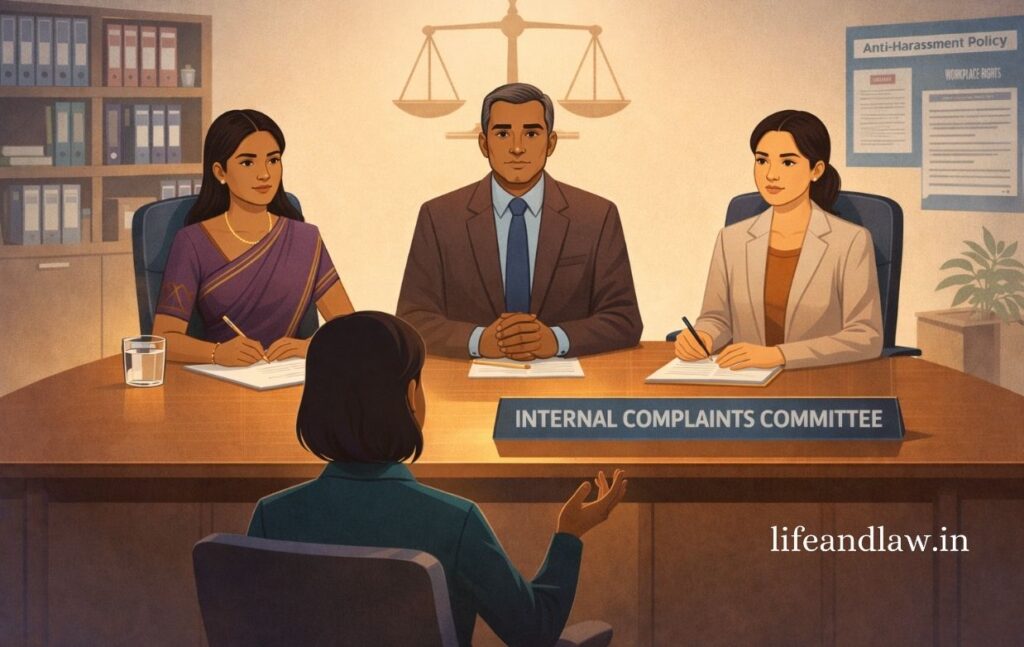
 Create Internal Complaints Committees in organisations with ten or more employees.

 Mandatory grievance redressal processes for investigating complaints within a specified timeframe.

 Protection from retaliation for employees who register complaints.

 Legal sanctions for noncompliance by the employer.

  1. Constitutional Protections

Article 14: Ensures equality before the law and equal protection of the law.

Article 15(1): Discrimination is prohibited on the basis of religion, race, caste, gender, or place of birth.

Article 21: Protects the right to life and human dignity, which includes a safe workplace.

  1. Bharatiya Nyaya Sanhita (BNS), 2023 Provisions

Section 74: Penalises assault or unlawful force against a woman with the intent to insult her modesty.

Section 79: Addresses verbal or written harassment that insults a woman’s modesty.

Sections 303 and 318: Applicable in incidents of workplace fraud or financial harassment that have an indirect impact on employee safety and rights.

  1. Factories Act, 1948 and Shops & Establishments Acts

These statutes also include measures for employee safety, particularly for female workers, with an emphasis on safe working conditions.

 Rights of Employees

All employees, regardless of gender, are entitled to:

A harassment-free, safe, and respectful workplace.

Submit concerns confidentially to the Internal concerns Committee or designated authority. 

Protection from retaliation or victimisation while reporting harassment.

 If internal methods fail, seek legal remedies, such as civil or criminal proceedings.

Seek counselling and support services to deal with harassment-related stress.

Employers are legally required to protect these rights and foster an environment in which employees can report abuses without fear.
Steps to Take if You Face Harassment

1.Documenting the Incident: Keep a record of all messages, emails, and other proof of harassment. Date, time, and witness information are crucial.

2.Report Internally: Contact the Internal Complaints Committee or the HR department. The complaint should be formal and written, if possible.

3.Seek Legal Advice: Consult a lawyer about your options and remedies. Lawyers can assist you in submitting complaints under the POSH Act or criminal legislation, depending on the nature of the harassment.

4.External complaint: If the internal procedure fails or the organization fails to comply, employees may file a complaint with the Local Complaints Authority or take civil/criminal action.

5.Maintain Emotional Wellbeing: Being harassed can be mentally taxing. Seek help from trustworthy coworkers, mental health specialists, or support groups.

Role of Employers in Preventing Harassment

Employers have an important role in creating a harassment-free atmosphere. Responsibilities include:

 Providing awareness and sensitivity training to staff.

 Forming Internal Complaints Committees and guaranteeing their appropriate operation.

 Implementing clear workplace policies that outline forbidden behaviour and consequences.

 Responding immediately and fairly to complaints.

 Protecting employees from retaliation and fostering a culture of respect.

A proactive employer not only follows the law, but also improves employee morale, productivity, and the organization’s reputation.

Conclusion

Workplace harassment is a breach of personal dignity and legal rights, and regulations such as the POSH Act, as well as constitutional and criminal prohibitions, give avenues for employees to seek redress. Awareness of these rights is critical for both employees and employers in order to promote a safe and equal workplace.

Author Adv. Abdul Mulla emphasises the necessity of understanding these legal rights on platforms such as www.lifeandlaw.in and www.asmlegalservices.in. His work raises awareness regarding workplace harassment, ensuring that employees understand their rights in the workplace.

RECENT POSTS

CATEGORIES

Leave a Reply

Your email address will not be published. Required fields are marked *

Life And Law Blogs

Life & law provides valuable insights by simplifying complex legal concepts and connecting them to real-life experiences …read more

Why I write

At Life & law, my mission is simple. to make the law accessible and empower people with knowledge to confidently face life’s challenges …read more

Copyright BlazeThemes. 2025